JULY, 2026. WORDS BY MAŁGORZATA KAŹMIERCZAK . Piece with artist magazine.
Rivers of Resistance
Some artists represent the world. Others intervene in it. The practices of Tania Cortés Becerra & Oscar Bahamonde, Arti Grabowski, and Fernando Foligno emerge from different cultural geographies, Ecuador, Poland, and Uruguay, yet they share a common understanding of art as an embodied encounter with political reality. What unites them is a commitment to the active gesture over the passive image: none of them treats the body, the landscape, or public space as a neutral surface. Each takes a received framework, the document, the monument, the civic stage, and makes it a site of friction. In a moment when politics is increasingly mediated, flattened into representation, that decision to step into the real is not a retreat into activism or spectacle. It is, to our eyes, the most urgent artistic position available. What art can do in the world has become as significant as what it can say about it, and these three practices understand that with a rare and necessary clarity.
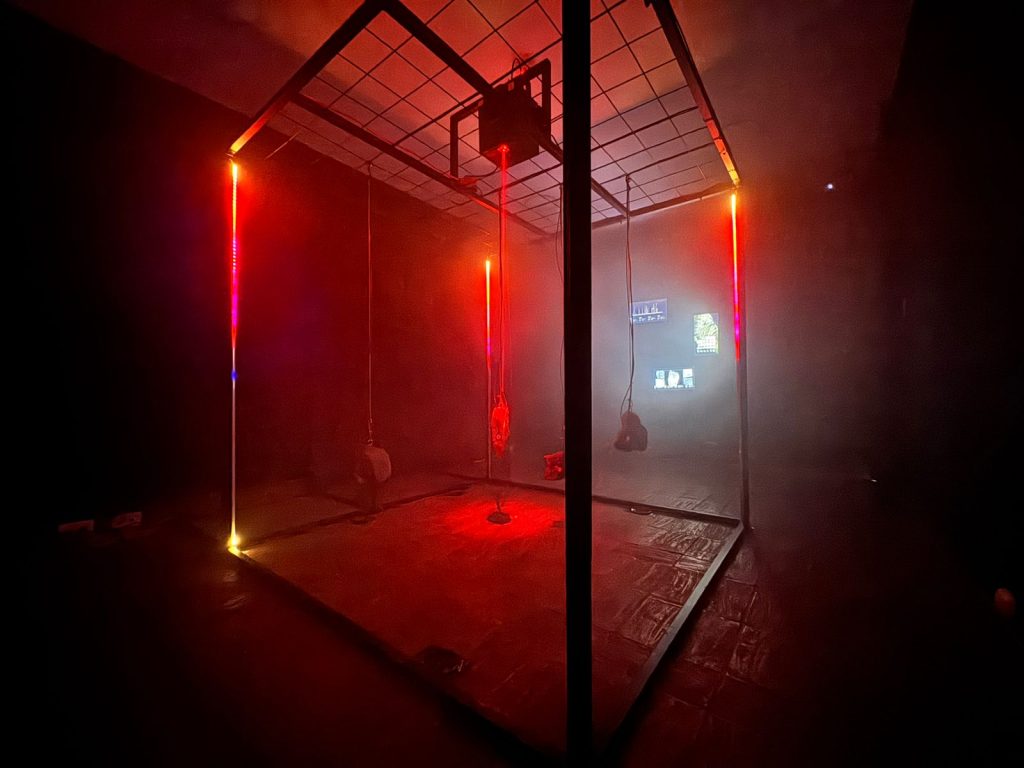
Tania Cortés Becerra & Oscar Bahamonde (Ecuador) approach the territory itself as a living archive. Volcanoes, mountains, rivers, and seismic landscapes are never passive scenery but active participants in history. Their collaborative projects explore the fragile relationship between human communities and geological time, revealing how ecological violence and political violence often share the same logic of extraction. Performance, sound, installation, and moving image merge into environments where nature ceases to function as a metaphor and becomes a political subject. Their work invites us to reconsider the Earth not as property but as an entity with its own agency.
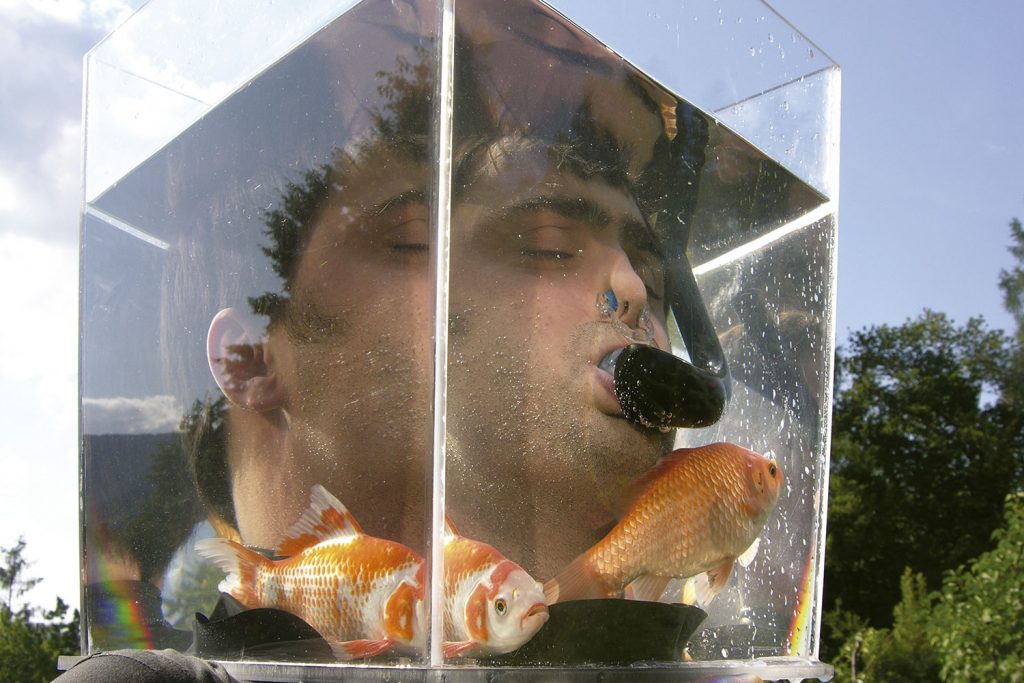
Arti Grabowski (Poland) explores the fragile conditions of coexistence through performance, transforming public space into a site of collective negotiation. His actions draw on the physicality of traditional games, rituals, and shared labour, revealing how contemporary societies have gradually lost spaces of direct encounter. Rather than producing spectacle, Grabowski constructs situations in which participation becomes both a challenge and a responsibility. During the 17th Cuenca Biennial, his performance Juegos callejeros revisited forgotten forms of communal play, using physical effort, unstable objects, and risky interactions as metaphors for trust, solidarity, and social fragmentation. By confronting participants with acts that required cooperation while exposing the tensions embedded within it, the work questioned how communities are built, sustained, and ultimately destabilized. The artist’s practice consistently places the human body at the centre of political and social experience, where vulnerability becomes a condition for imagining new forms of collective agency.
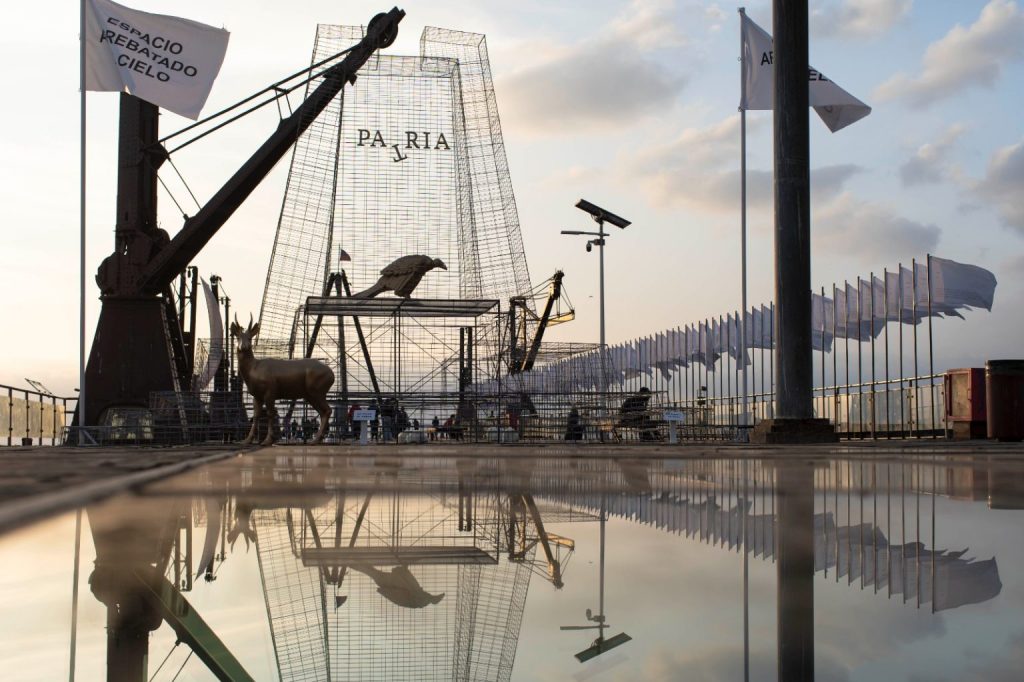
Fernando Foligno (Uruguay) approaches political memory through another route. His artistic language grows out of collective histories shaped by dictatorship, censorship, and democratic reconstruction in Uruguay. Yet his work never remains trapped in the past. Historical symbols are transformed into open forms that speak to the present, asking how societies remember, forget, and rebuild themselves. Foligno’s installations and interventions reveal that memory is not a fixed monument but an active process, continuously rewritten through civic engagement. The political dimension of his work lies precisely in this insistence that remembrance is a living practice.
Why these picks?
Although their artistic vocabularies differ, these three practices converge around a shared conviction: art is capable of producing forms of knowledge unavailable to conventional political discourse. Instead of offering solutions, they create conditions for attention. Instead of certainty, they cultivate perception. Their practices ultimately ask a simple yet demanding question: how might art reshape not only what we see, but how we inhabit the world together?
Małgorzata Kaźmierczak is a curator, researcher, writer, and President of AICA International (International Association of Art Critics). She is Assistant Professor at the University of the National Education Commission in Kraków, Poland, where her research focuses on performance art, socially engaged artistic practices, and the intersections of art, politics, collective memory, and environmental justice.
Piece with Artist MAGAZINE © JULy 2026
@piecewithartist
@dyrektorkasamejsiebie