may th, 2026. words by ROLAND-PHILIPPE KRETZSCHMAR. Piece with artist magazine.
Three Painters of the Unstable Self
Elsa Rouy, Sasha Gordon, and Yu Nishimura belong to different generations and contexts, but they meet in one important place: none of them treats figuration as something fixed. In their hands, the painted figure is not a stable image of identity but a zone of pressure; psychological, bodily, and atmospheric. That is what makes them such a convincing trio now. They show three distinct futures for painting: the body as rupture, the self as performance, and memory as image.
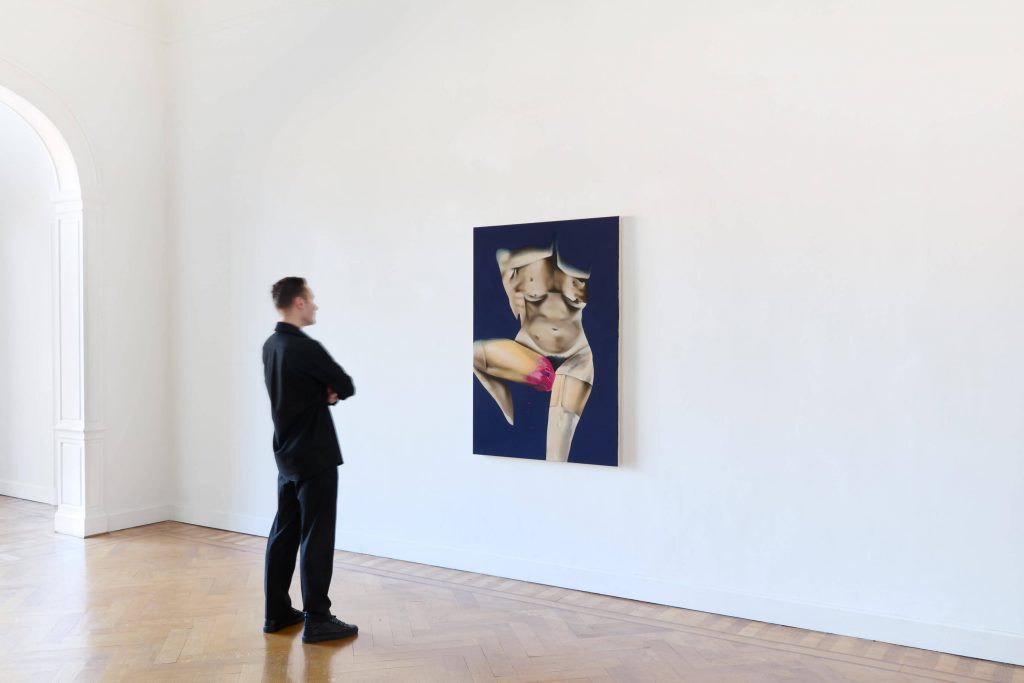
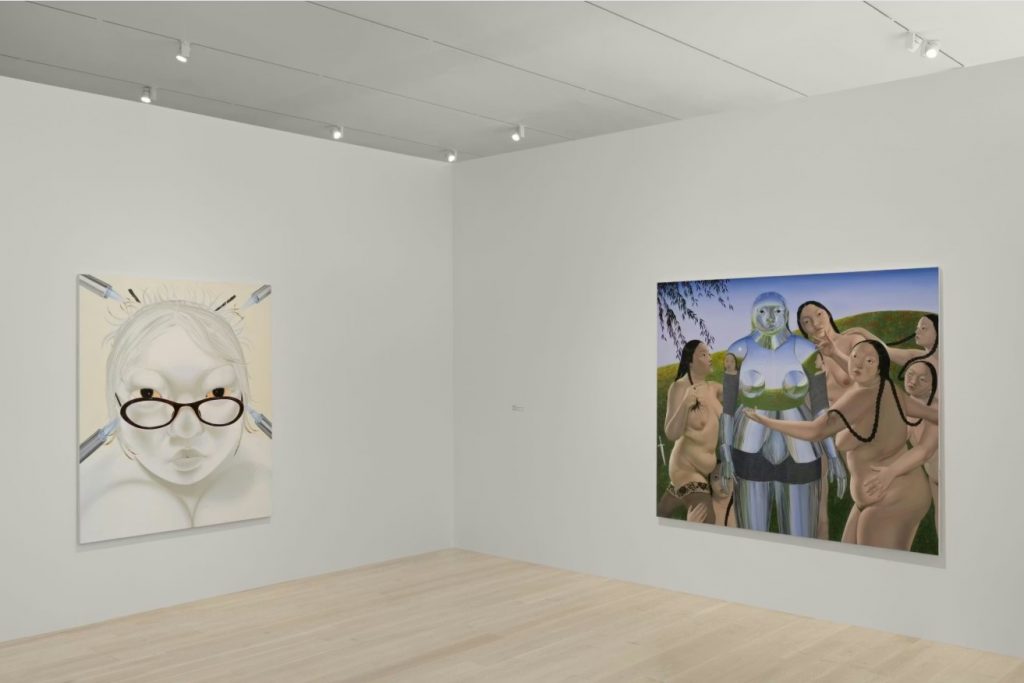
Elsa Rouy is the most viscerally unsettling of the three. Born in 2000 in the UK, she was educated at Camberwell College of Art and is now based in London. She has moved quickly from early solo exhibitions at Guts Gallery and Steve Turner to recent presentations at GNYP in Antwerp and Berlin and Patricia Low in Venice. In April 2026, she had a museum group show at AMOCA in Wales and later during the year, a solo show at MCSW Elektrownia in Radom. Her paintings make skin do far more than describe the body: it stretches, bruises, splits, thickens, and becomes the very site where desire, shame, fragility, and control are worked through. In I Pictured Skin, that pressure becomes especially clear. Rouy’s figures seem caught between exposure and defense, theatricality and collapse. The work is grotesque, but never for effect alone; its real subject is psychic intensity.
Sasha Gordon operates with a different kind of force, more polished, more cinematic, but no less psychologically charged. Born in 1998 in Somers, New York, Gordon received her BFA from RISD in 2020 and has built an unusually strong early CV: solo exhibitions at Matthew Brown, Jeffrey Deitch, Stephen Friedman, ICA Miami, and, in 2025, Haze, her first solo exhibition with David Zwirner. Her institutional footing is already substantial, with works in collections that include the Whitney, The Broad, the Hammer, LACMA, the Brooklyn Museum, MFA Houston, and the Baltimore Museum of Art. Gordon often paints herself, but these are not straightforward self-portraits. They are staged psychic dramas in which the body becomes an actor, an alter ego, even a trap. What makes the work land is its tension between virtuosity and vulnerability: she uses hyperreal surfaces and narrative suspense to make the self feel unstable, multiplied, and slightly haunted.
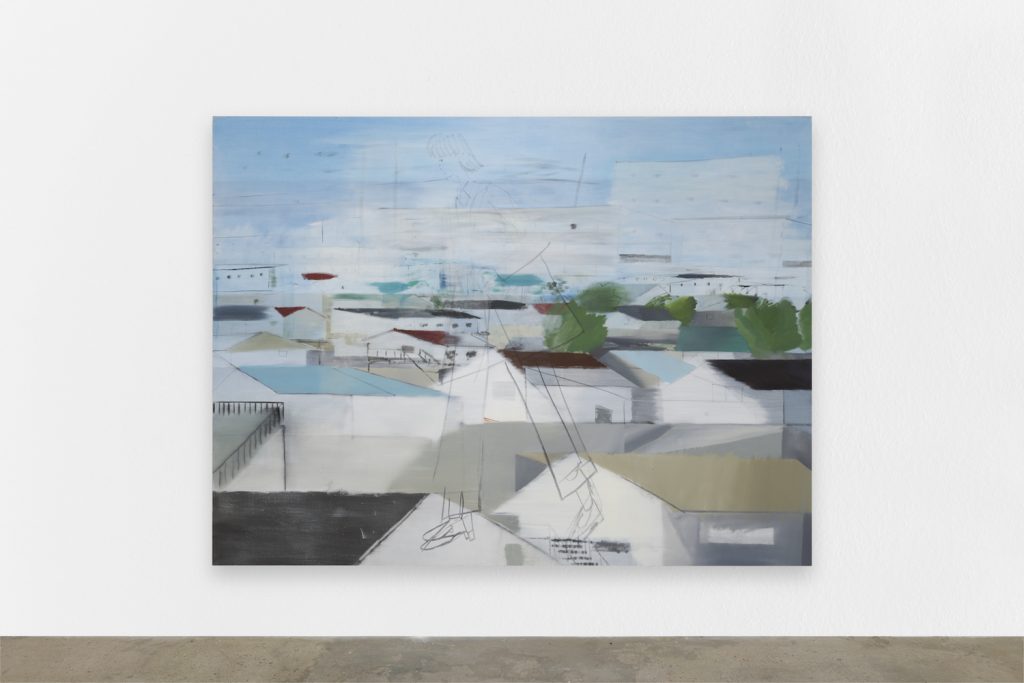
Yu Nishimura is quieter than Rouy or Gordon, but that quietness is exactly his strength. Born in Kanagawa in 1982 and trained at Tama Art University, he has developed a language of painting that draws on oil and tempera, street photography, anime, and the suburban landscapes of Japan. His 2025 exhibition Clearing Unfolds at David Zwirner was his first solo show in the United States, and his work entered a further institutional phase with a Rubell Museum solo presentation opening in December 2025 and running through fall 2026. His CV now includes institutional collections such as the Centre Pompidou, LACMA, ICA Miami, the Rubell Museum, the 21st Century Museum of Contemporary Art, Kanazawa, and the Hirshhorn, which acquired Confluence in 2025. Nishimura’s figures do not erupt in the way Rouy’s do, or perform in the way Gordon’s do; they drift, hover, and recede. His paintings feel like images remembered a little too late: tender, lucid, and slightly out of reach.
What makes this selection work is not only geography, but rhythm. Rouy brings corporeal unease and raw immediacy. Gordon brings narrative complexity and institutional confidence. Nishimura brings restraint, atmosphere, and a different temporal register altogether. Together, they form a much sharper curatorial argument than a purely trend-led selection: three painters who are each rethinking what the figure can hold, and who seem likely to matter not just because they are rising, but because they are already altering the emotional terms of contemporary painting.
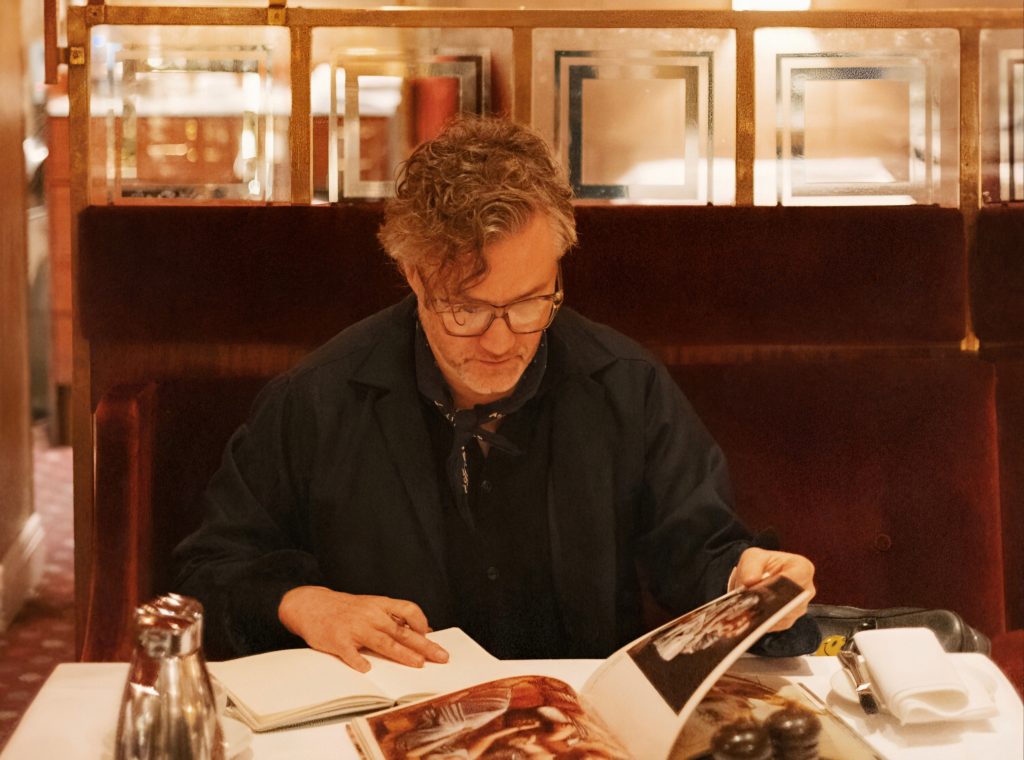
Roland-Philippe Kretzschmar is the Founder and Editor-in-Chief of The Art Bystander, an independent platform operating at the intersection of contemporary art, media, advisory and cultural intelligence.
With a multidisciplinary background spanning journalism, fashion, architecture, business strategy, digital innovation and creative direction, he brings a distinctive perspective to the evolving art ecosystem. He leads The Art Bystander’s editorial and curatorial vision while advising collectors, galleries, institutions, artists and brands on art, positioning and cultural strategy.
Piece with Artist MAGAZINE © may 2026
@piecewithartist
@theartbystander