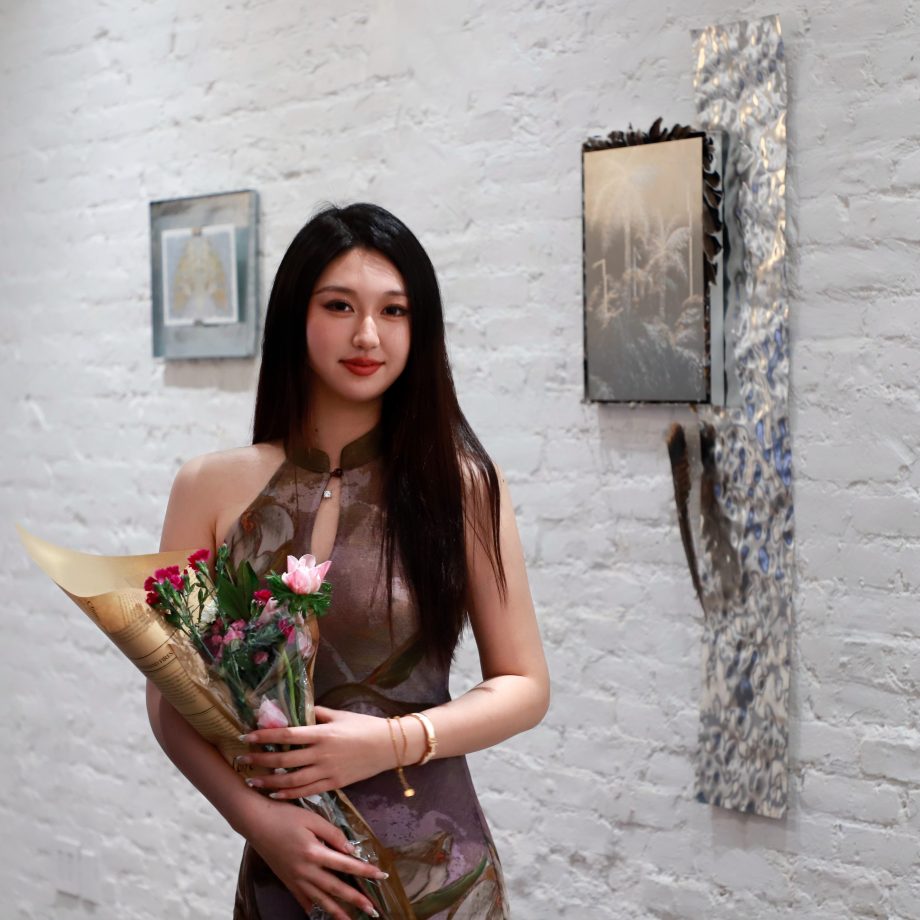
CURATOR. NEW YORK. USA
JINYI FREYA XU (2002) IS ABLE TO BUILD EXHIBITIONS AND ENCOUNTERS. EACH PROJECT IS A DEVICE FOR RELATIONS, A MAP OF TENSIONS BETWEEN IDEA AND MATERIALIZATION. FAR FROM NEUTRALITY, HER CURATORIAL PRACTICE ACTIVATES SPACE, FORCING IT TO BE INHABITED FROM PRESENCE. MEMORY, ONCE PERSONAL, BECOMES COLLECTIVE. STARRING JINYI FREYA XU @FREYA.ART.SYMPHONY
WORDS BY CHUMBUM PARK. PIECE WITH ARTIST MAGAZINE
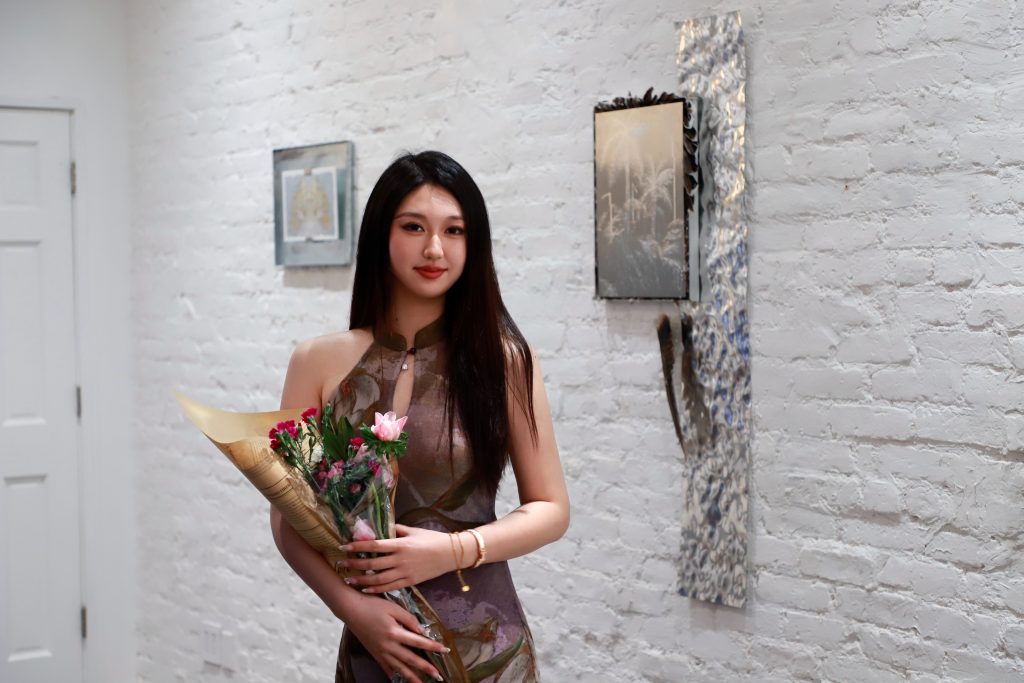
“Could you introduce yourself? Where did you study art, and why do you engage with curatorial practice?“
My name is Jinyi Freya Xu , and I recently graduated from New York University with a Master’s degree in Visual Arts Administration. My academic training combines art history, cultural management, curatorial studies, and the global art market. Throughout my time in New York, I have worked across galleries, art fairs, art advisory projects, and independent curatorial initiatives, experiences that have given me insight into both the intellectual and operational dimensions of the contemporary art world.
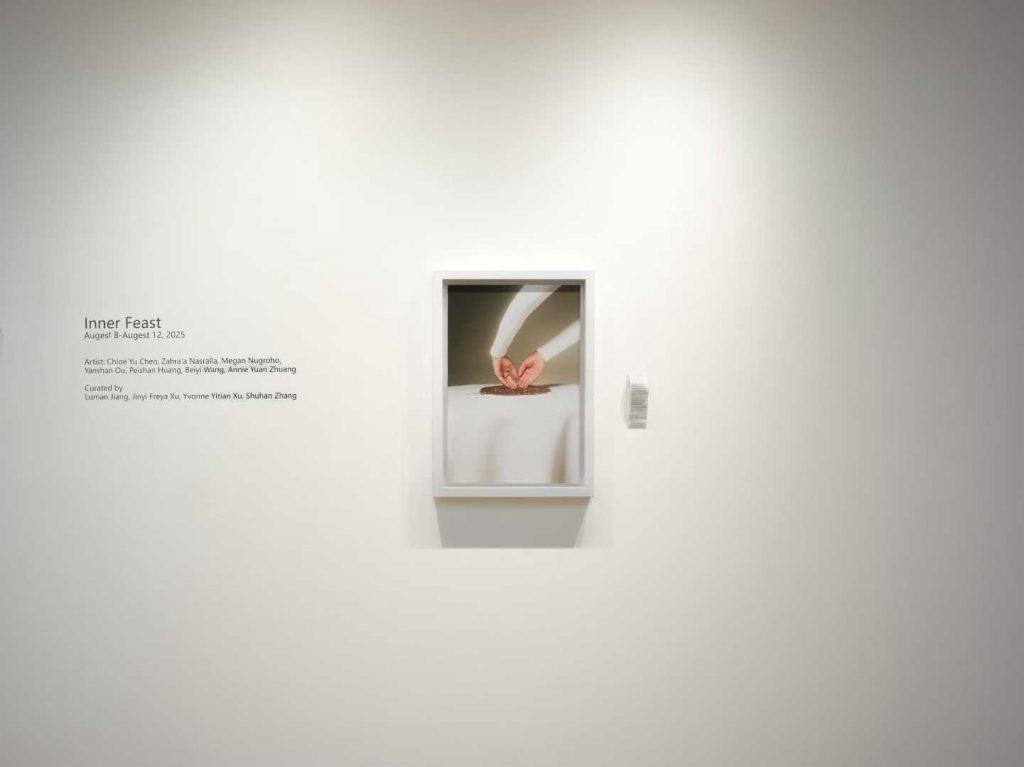
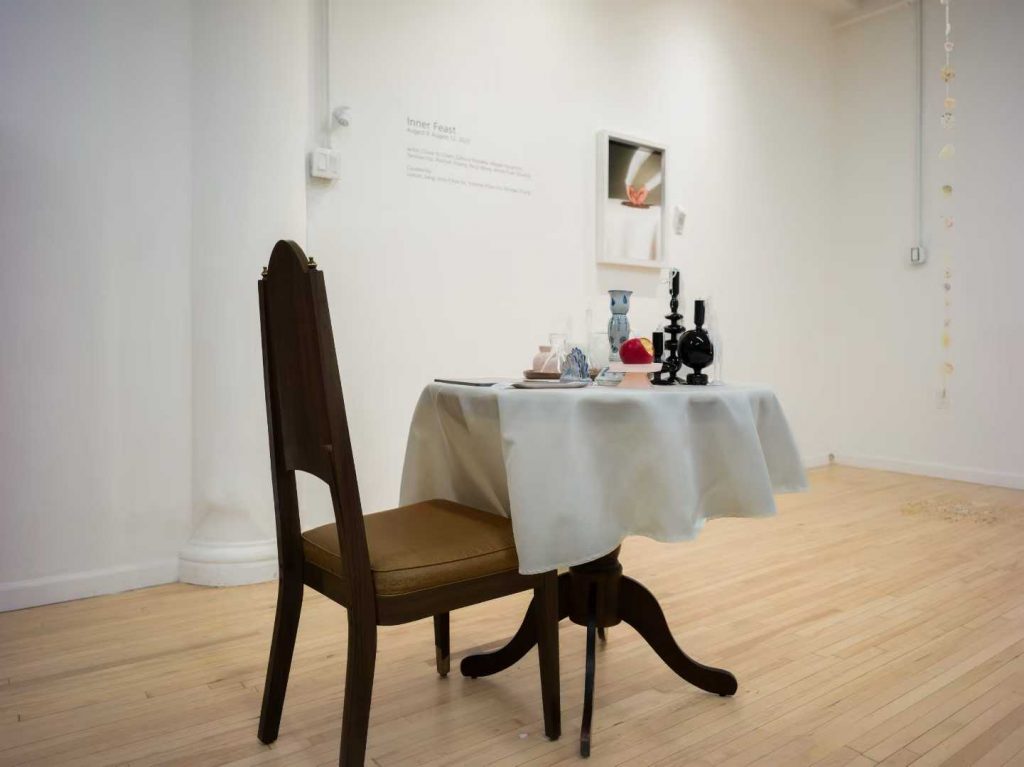
I became interested in curatorial practice because I viewed excellent exhibitions, such as Georgia O’Keeffe and Henry Moore exhibitions at MFA Boston and great curatorial practise in MOMA, Guggenheim museum, and many emerging galleries in New York. To me, curating is not simply about presenting artworks; it is about creating meaningful relationships between artists, ideas, spaces, and audiences. So I began my first exhibition in Accent Sisters with my friends, Shuhan Zhang, Luman Jiang, and Yvonne Yitian Xu, who are great curators, to discover the relationship between spirit and food by the exhibition titled Inner Feast. Through this curation experience, I am interested in exploring how contemporary art can generate new ways of understanding identity, memory, perception, and our relationship to the world around us.
For me, engaging with curatorial practice is not merely about selecting and displaying artworks; it is a vital methodology for constructing perceptual experiences and exploring the psychological structures that define our interaction with the world. I view the exhibition space as a porous container where subconscious energy, cultural memory, and material reality can intersect. My passion lies in transforming abstract philosophical or psychological inquiry into physical, tangible spaces that invite deep viewer integration and dialogue.
“What do you look for as a curator in selecting artists and their works? How do you curate? What are the qualities of the artists that attract you?“
I am drawn to artists whose practices emerge from genuine inquiry rather than aesthetic trends. The artists who interest me most are those who use art as a method of investigation – whether they are exploring memory, identity, embodiment, migration, language, technology, or social structures.
When curating, I begin with a conceptual framework rather than a predefined medium or style. I look for works that can enter into dialogue with one another while maintaining their individual complexity. I am particularly interested in artists who possess intellectual rigor, emotional honesty, and a willingness to embrace ambiguity.
When selecting artists, I am consistently drawn to those whose work demonstrates a profound awareness of materiality, temporal depth, and a unique capacity for intuitive or symbolic language. I am fascinated by artists who treat their work as active participants capable of holding memory, affect, or psychological tension—whether through mixed media, ceramics, or spatial interventions.
My curatorial approach is deeply conceptual and phenomenological. Rather than organizing exhibitions around static, illustrated themes, I seek to treat concepts as methodological questions. For example, in my project Inner Feast, the exhibition was curated as a “psychological banquet”, structuring the space into a three-course psychic progression (appetizer, entrée, dessert) to guide viewers through their own subconscious. Ultimately, I am attracted to artists who possess a rigorous experimental spirit and whose work allows for a non-linear dialogue with the audience’s senses. Like Annie Zhuang Yuan’s Five Spices, she uses real spices to represent five types of memories, identities, and ideologies in a moving but balanced installation, which makes me feel so related, so I included the work in the exhibition.
“How do you seek to set yourself apart from the other curators? What is unique to your curatorial vision?”
My curatorial practice is shaped by an interest in the relationship between individual consciousness and larger social systems. I am fascinated by how personal experiences – memory, desire, anxiety, intimacy, belonging – are influenced by broader cultural, political, and economic structures. Additionally, my unique curatorial signature lies in bridging seemingly disparate philosophical spheres, such as juxtaposing Freudian and Jungian models of the psyche with Daoist wu wei (无为) philosophy. Furthermore, I aim to reshape themes like “memory” or “objecthood” into structural inquiries. Instead of merely looking back at the past, my exhibitions explore the present self. Sometimes an exhibition grows organically with the artist’s work, and the concepts extend and develop themselves.
Rather than treating art as a purely aesthetic object, I approach exhibitions as spaces where psychological, philosophical, and social dimensions intersect. I am particularly interested in creating exhibitions that allow for emotional and intellectual reflection simultaneously.
As someone working between Asia and the United States, I also bring a transnational perspective to my projects. I am interested in questions of cultural translation, diaspora, and the ways identities are continuously negotiated across different contexts.
“How do art history and theory inform your curatorial practice? What are some of the philosophical ideas or thoughts that concern you as a curator?”
Art history and theory provide essential frameworks for understanding contemporary artistic production. They allow us to situate individual works within broader cultural and historical trajectories. Art history is my root and guides my every thought subconsciously. My appreciation of art is based on the art history I learnt, the masterpieces I digested, and the great art theory I read. What influenced me the most is Surrealism, and the manifesto written by André Breton, particularly its belief that imagination, dreams, intuition, and the unconscious possess transformative potential. What fascinates me about Surrealism is not merely its visual language, but its ambition to break down the boundaries between rational thought and inner experience. The movement proposed that reality is far richer and more complex than what can be observed on the surface, an idea that continues to resonate with me as a curator.
This interest in the unseen dimensions of human experience has led me toward thinkers such as Sigmund Freud and Carl Jung, whose theories of the unconscious, memory, desire, archetypes, and psychological transformation continue to influence my approach to exhibition-making. In my own curatorial projects, I am often drawn to artists who explore themes of memory, identity, emotion, dreams, ritual, and personal mythology. I am interested in how artworks can function as visual manifestations of internal states that are otherwise difficult to articulate through language.
Ultimately, theory serves not as a rigid framework that dictates my curatorial decisions, but as a tool that helps me ask better questions. The exhibitions I am most interested in creating are those that invite viewers to move between intellectual inquiry and emotional experience. Rather than presenting fixed conclusions, I hope to create spaces where audiences can reflect on the complexities of human existence, discover unexpected connections, and engage with art as both a personal and collective experience.
“Between theory and practice, which do you consider to be more important for the field of art? How does practice ground theory within reality? Does theory push practice towards more imaginative and aspirational directions? Or are the two incompatible?“
I do not see theory and practice as opposing forces. Rather, they exist in a productive relationship. Theory provides language, context, and critical frameworks that help us understand artistic practices. Practice, on the other hand, tests the limits of theory by engaging directly with material, experience, and reality.
Without theory, art risks becoming purely decorative. Without practice, theory risks becoming detached from lived experience. The most compelling artistic and curatorial work emerges when theory and practice continuously challenge and inform one another. Theory acts as the imaginative catalyst. It expands our vocabulary and pushes practice away from repetitive aestheticism into aspirational, deeply reflective terrains. However, theory without practice remains trapped in an insular echo chamber. Practice is what grounds theory within reality. It translates abstract texts into tactile, spatial interventions – such as the texture of mineral pigments on rice paper or the scent of handcrafted spice bags. The exhibition space is precisely where theory is “digested” and felt, transforming cold intellectual structures into warm, lived human experiences.
“What is the purpose of contemporary art? How can it serve as a catalyst to change the world for the better?”
The primary purpose of contemporary art is to disrupt the familiar, automatic assumptions through which we navigate our daily existence. We rarely touch the world directly; we touch it through the filters of language, media, and internalized social narratives. Contemporary art cracks open these rigid mediums, creating a temporary space of autonomy where we can see the world anew.
It serves as a catalyst for change, not necessarily by offering literal, didactic solutions to systemic crises, but by functioning as a tool for psychic intervention and collective empathy. By organizing exhibitions that foster inner healing, bridge cross-cultural boundaries, or re-evaluate our ecological relationship with material objects, art can subtly recalibrate human consciousness. Keep asking questions, make people be aware of the current issues, is the key not only to change the world, but to make the world better. True social change always begins with a shift in perception.
“How do you view the relationship between art and money? Is there a contradiction for artists in critiquing the very same system on which they rely on for their livelihoods? How can art liberate itself from the corrupting influences of power and money, or is this not a necessity or perhaps an impossibility?”
As a person who works closely with the art market, I view the relationship between art and money with pragmatic realism rather than romantic idealism. In fact, a healthy market can provide artists with the resources, visibility, and institutional support necessary to sustain ambitious practices. The problem arises when financial value becomes the only framework through which art is understood. When market performance begins to replace critical discourse, scholarship, and genuine engagement with artistic ideas, the ecosystem becomes less diverse and less intellectually vibrant.
I also do not see a contradiction in artists critiquing the very systems that support them. Contemporary artists have long engaged with questions of power, capital, labor, and institutions while simultaneously participating in those structures. Artists are not external observers standing outside society; they are active participants within it. Some of the most compelling artistic critiques emerge precisely from this position of proximity rather than distance.
“Is visual impact and perception the most important aspects of evaluating contemporary art? Or the idea and the meaning behind the art? How do you synthesize or evaluate properly the triad of relationships between color, form, and meaning when seeing an artwork or a body of work by an artist?”
For me, the strongest works achieve a synthesis between visual form and conceptual depth. Visual impact may attract attention, but meaning sustains engagement.
When evaluating an artwork, I consider how color, form, material, space, and concept interact with one another. Formal elements are never separate from meaning but are the means through which meaning is produced and communicated. A successful artwork creates a relationship in which aesthetic experience and intellectual inquiry reinforce one another rather than compete.
“Who are some of the contemporaries in the curatorial field whom you admire? How about historical figures in the art curation field?”
Among contemporary curators, I greatly admire Hans Ulrich Obrist for his commitment to dialogue and knowledge exchange, and Okwui Enwezor for expanding the geographical and intellectual boundaries of contemporary art discourse.
I also deeply respect Hou Hanru for his work on globalization, urbanism, and transnational cultural exchange, as well as Carolyn Christov-Bakargiev for her interdisciplinary and experimental curatorial approaches.
Historically, Harald Szeemann remains one of the most influential figures for me. His exhibitions demonstrated how curating could function as an independent creative and intellectual practice rather than merely an administrative role.
Where do you see yourself in the next 5 to 10 years? What are your goals and hopes for the future?
In the next five to ten years, I hope to build a curatorial practice that operates across exhibitions, research, publishing, and cultural entrepreneurship.
I am particularly interested in creating platforms that support emerging artists while fostering meaningful dialogue between Asian and international contemporary art communities. I would like to develop long-term exhibition programs that combine scholarly rigor with public accessibility.
Ultimately, my goal is not simply to organize exhibitions, but to create cultural infrastructures that enable artists, ideas, and communities to thrive. I hope to contribute to a more thoughtful, inclusive, and globally connected art ecosystem.
Piece with Artist Magazine. july 2026. © www.piecewithartist.com
@piecewithartist
@chun.park.7
@FREYA.ART.SYMPHONY