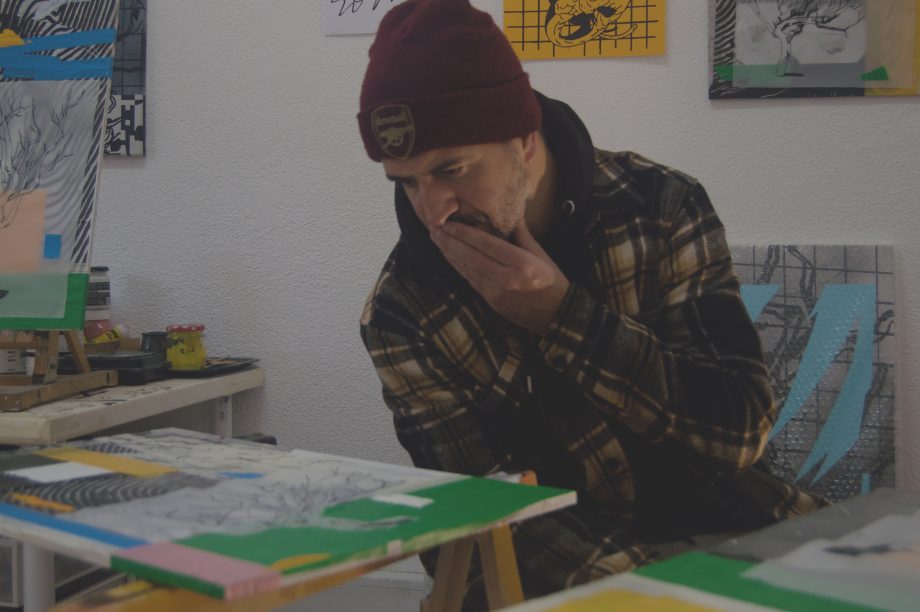
PAINTER. ALMADA. PORTUGAL
HIS NAME IS TIAGO HESP, AND HE WORKS IN VISUAL ART, FOCUSING ON A MULTIDISCIPLINARY PRACTICE THAT INCLUDES MURAL ART, SCENOGRAPHY, ILLUSTRATION, MUSIC, AND PAINTING. BORN IN PORTUGAL, HE HAS LIVED AND WORKED FROM HIS STUDIO BASED IN ALMADA. HE BELIEVES THAT TO PAINT IS A PATH UPWARDS TO RESOLVE HIMSELF AS A HUMAN BEING, ALWAYS STARTING FROM THE DARK TO FIND BALANCE BETWEEN OPPOSING FORCES, IN A BATTLE WHERE THE SELF AND THE EGO MEET. STARRING @TIAGOHESP WWW.TIAGOHESP.COM WWW.PIECEWITHARTIST.COM
PHOTOGRAPHY COURTESY OF TIAGO HESP


“Where and how did your relationship with art begin?“
It started when I was a kid—wandering, trying to draw characters I liked, cartoons. I remember, as a teenager, developing this connection with repetition, this fascination with lines slowly evolving. Drawing and music were always present in my life, but for a long time, they came and went, like a wave I could sense but didn’t quite know how to ride. Now, I see art more as a way of taking care of myself. I try to take care of it as well, with discipline and consistency.
“How would you define your work? What does it seek to represent?“
It is a work about questioning—questioning constantly. Bending the knee, seeing again, looking once more from another angle. What drives me is discovery at every new step, not knowing what comes next. Ignorance is a starting point. Setting out on an adventure while embracing surprise. Taking chance as a value, embracing the infinite possibilities it offers. As in life—sometimes you simply work with what life brings you. Collage seems to be the way I think: a way of accepting uncertainty, chaos, and new possibilities. Even when I’m not working with analogue collage, my mind is always collaging—assembling parts, noticing lines that match or clash with other lines, forms, and shadows. This acceptance, and even the thrilling sensation of not fully controlling the fate of the artwork, brings light to my process. There is repetition, but just enough for me to know the process and when to let it go.
“Where do you get your inspiration from?“
I focus on natural fractals — repetitions that are never exact, always imperfect. My gaze is trained to wander, to zoom in, to move across different scales. I find beauty in small places: in textures, lines, and forms that I teach my hand to draw. Everywhere there is something waiting to be discovered — something new, something that no one has seen yet, or at least not in the way I see it.
“Do you have any quirks or habits in your studio?“
I have a studio in a small neighbourhood, near the place where I grew up. It feels good to take my kids to school and then arrive at the studio, say hi to the people around, go to the coffee shop, and have a coffee while looking at the absolutely stunning view over the Tejo River that I have the privilege to access. Simple things telling me things. Back at the studio, I take a bit of time, look at my timeline for the day, put on some music, and then start.
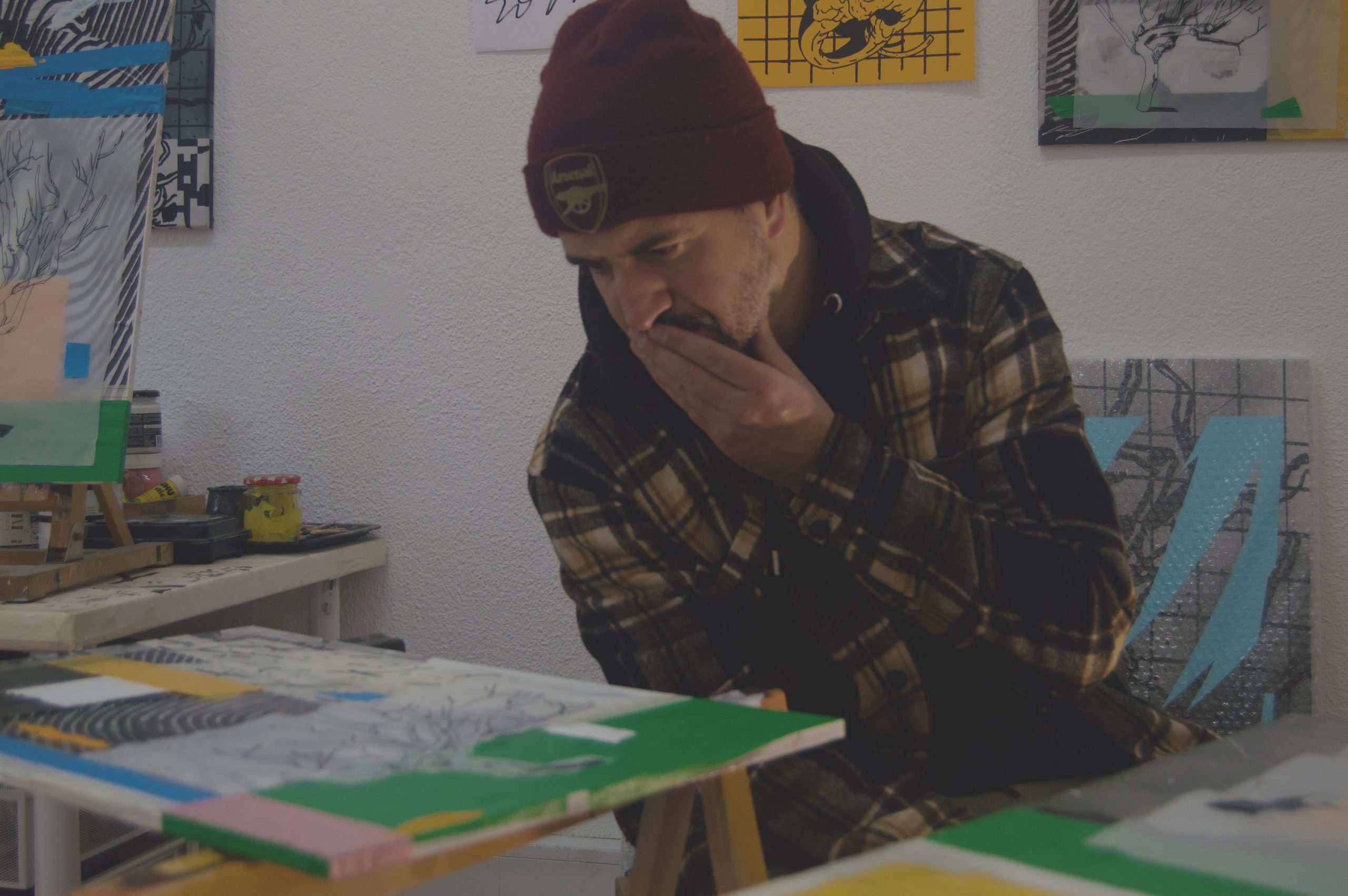
“Do you have any rituals before you start painting?”
Most of the time, it’s pure chaos. Yet every now and then, I feel the need to restore order. Clean. Wash my face. Reset.
“At what time of day do you feel most like painting?“
I usually work a 9–5 schedule since I have two kids, and I really enjoy picking them up from school. I feel genuinely happy when I start work in the morning; it makes me feel focused, disciplined, and joyful.
“What are your favorite materials and techniques?“
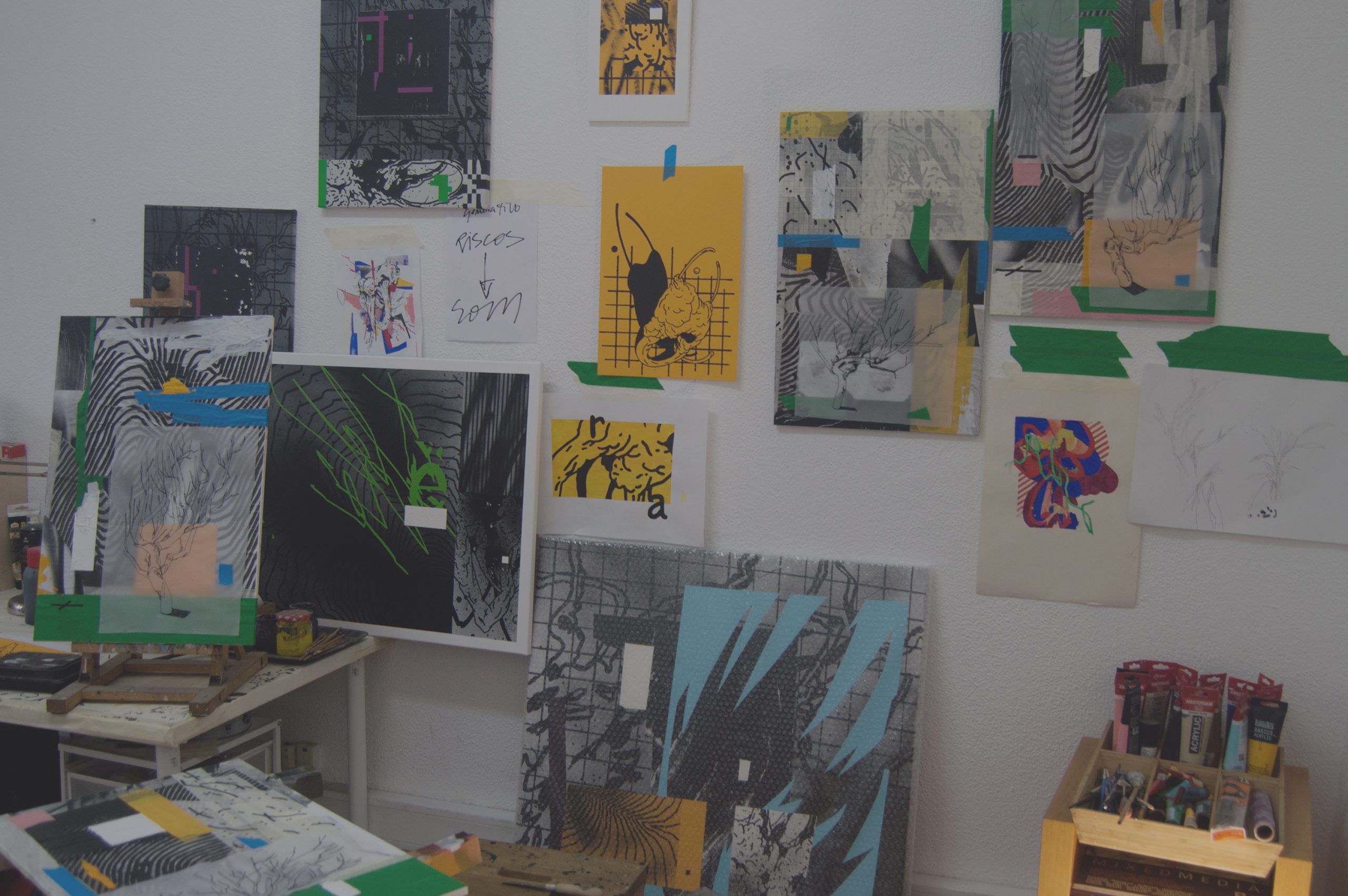
Since my practice is split between the studio and the streets, I always try to match techniques and, when possible, materials in both contexts. In the studio, I mainly work with acrylics and spray on canvas, as if I were working outside. But I also really enjoy, from time to time, exploring collages with different kinds of paper and tape.
“Where would you be most excited to exhibit your work? “
I’d love to bring my art to the center of Europe—somewhere like Berlin would be extraordinary.
Piece with Artist Magazine. JANUary 2026. © www.piecewithartist.com
www.TIAGOHESP.com
@tiagohesp