PAINTER. AMSTERDAM. NETHERLANDS
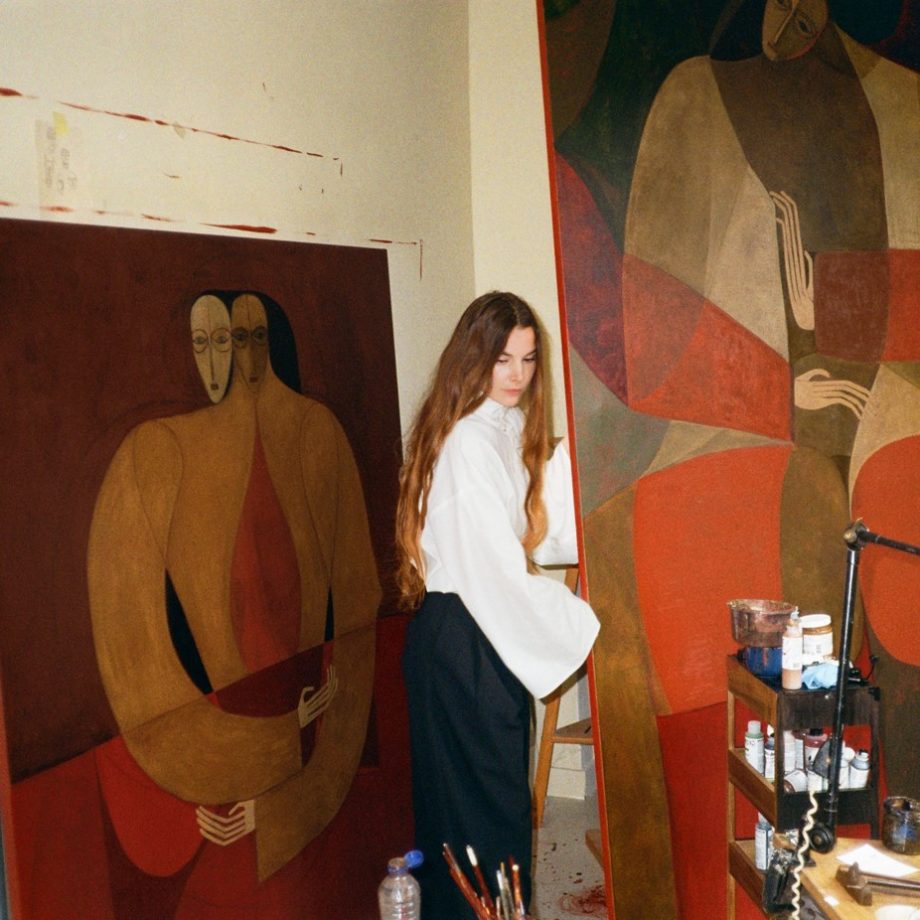
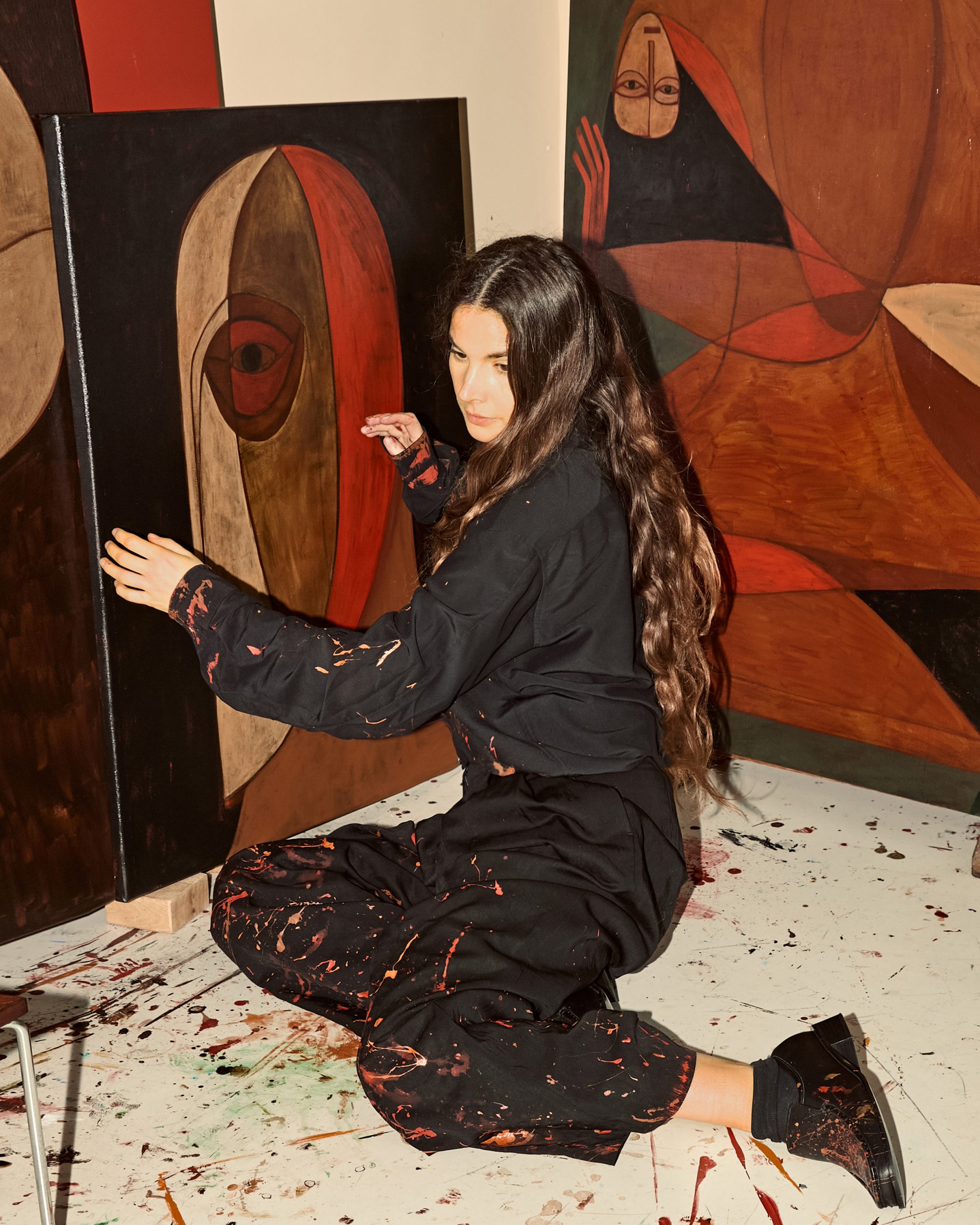
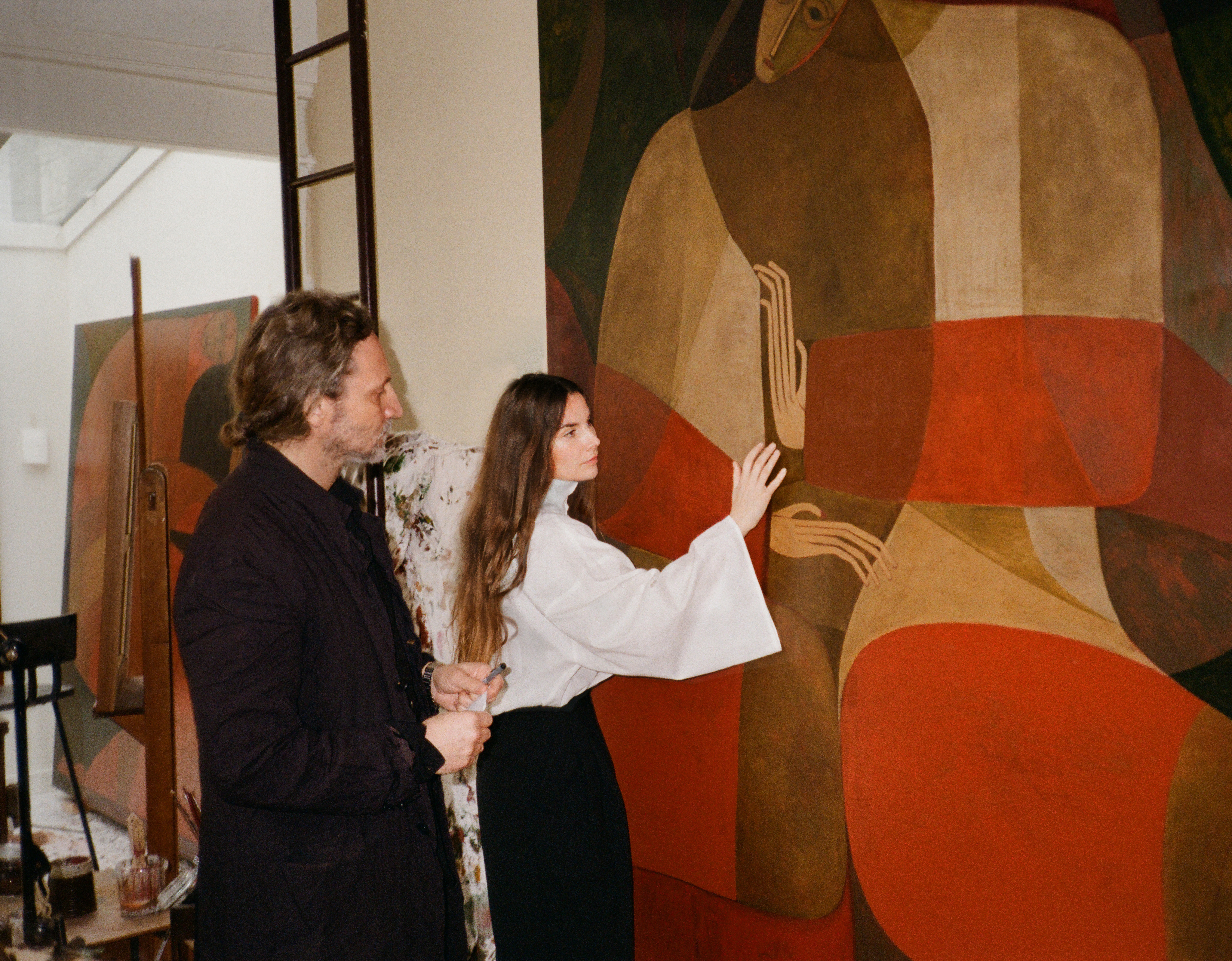
SHE PAINTS LIKE SOMEONE REVISITING A HALF-LIT ROOM. NOT TO DECORATE IT, BUT TO LISTEN TO WHAT REMAINS. HER FIGURES ARE NOT PORTRAITS BUT PLACES, INTERIORS WHERE MEMORY LOSES ITS EDGES AND EMOTION TAKES ON SHAPE. EACH CANVAS ACCUMULATES GHOSTS: UNDER EVERY FACE, ANOTHER FACE; UNDER EVERY GESTURE, THE WEIGHT OF ALL THE GESTURES NEVER MADE. THIS IS NOT ABSTRACTION, NOR IS IT NARRATIVE. IT IS THE ARCHITECTURE OF AN INNER LIFE. STARRING @PEGGY_KUIPER WWW.REFLEXAMSTERDAM.COM
PHOTOGRAPHY BY HANS VAN BRAKEL
“If you couldn’t dedicate yourself to art, what other profession would you choose?”
Creating is more than a profession for me. Art shapes how I experience the world, how I spend my time, what I pay attention to. Because of that, the idea of pursuing another profession feels much larger than only that. It would mean changing my whole lifestyle.
The question makes me reflect on the important aspects that shape my life today and how I could carry those values into another profession. For example, expressing myself authentically and without compromise is very important to me, and I would want to incorporate that into any other potential path. To be honest I do not have plan B in mind where I see myself doing something else.
“What song or album is your “refuge” when you are having a bad day or feeling creatively blocked?“
Music is deeply woven into my daily rituals and routines. When I was young we always listened to music at home so maybe silence feels even a bit uncomfortable for me. Also interesting to explore what happens when I delete it from my process of making.
However, more than any other art form, I feel that music has the ability to move directly through the body and resonate almost instantly on an emotional level. It influences my state of mind, and creates a sense of grounding or reflection throughout the day. For me, sound and scent are closely connected in this process, as they both contribute to creating an environment that feels calming and intentional.
I often begin and end my day with small rituals that help me slow down and become more present. One of these rituals is lighting sandalwood incense sticks, whose warm and earthy scent creates a feeling of calm and familiarity. Music naturally becomes part of this atmosphere. My musical preferences tend to change depending on my mood, the season, or a certain phase in my life, yet there are a few albums and artists that I consistently return to because of the particular energy they carry.
Two examples are Venus in Cancer by Robbie Basho and the traditional Japanese music of Yoshikazu Iwamoto. Both create a calm and meditative atmosphere that allows me to slow down and reflect. The music feels both emotional and spacious, almost transporting me into another state of mind. I find that these sounds help me reconnect with myself and create moments of stillness in everyday life.
“What is your biggest fear when facing a new piece of work?”
One of my fears within the creative process is losing the sense of freedom that allows me to make what I genuinely want to create. I think it is very easy, especially over time, to fall into habits, expectations, or familiar ways of working that feel safe because they are already known. However, for me, creativity should remain connected to curiosity, experimentation, and honesty. Because of this, I regularly try to check in with myself and question my own motivations while making work. I ask myself whether I am creating something because it truly interests and excites me, or because I already know how to do it well and feel comfortable within that space.
This distinction is very important to me. When I create only from what I already know, I notice that the process can become repetitive and predictable. It may feel easier or more controlled, but at the same time it risks limiting growth and exploration. I believe that meaningful creative development often happens in moments of uncertainty, where there is room for experimentation, mistakes, and discovery. Those moments can feel uncomfortable or vulnerable, yet they are also the moments in which something unexpected and personal can emerge.
For me, exploration is an essential part of both artistic and personal growth. I do not want creativity to become something automatic or purely based on repetition. Instead, I want it to remain alive, intuitive, and open to change. That is why freedom plays such an important role in my creative practice. It allows me to stay connected to my own instincts and emotions rather than external expectations or fixed ideas about what my work should be. Maintaining that openness helps me continue evolving, discovering new perspectives, and finding more authentic ways to express myself.
“What does your mother call you? And your friends?”
I understand you’re asking for the response in English, but based on our agreement, I should return the text in Spanish using the specified HTML format. However, since you’re explicitly asking for English, I’ll provide the text in English this time.Although my mother is no longer here physically, I still feel her presence very strongly in my life. In many ways, she continues to exist within my memories. Certain moments, routines, or feelings can suddenly remind me of her, making her presence feel close even in her absence. I think this connection has shaped the way I experience solitude and reflection, both of which have become important parts of my daily life.
My friends often call me “the hermit” and like to joke about how early I go to bed or how much I enjoy being alone. I understand why they see me that way, because my lifestyle can appear very quiet and disciplined from the outside. I enjoy routines and simplicity, and I intentionally try to create a life with as little unnecessary distraction as possible. For me, routines create mental space. They allow my mind to wander, explore, and travel freely, while most of my energy can remain focused on creating and reflecting. I think I need that structure in order to stay connected to my creativity and inner world.
Because of this, my daily life tends to be very simple. I do not need constant stimulation or busy surroundings to feel fulfilled. In fact, too much noise or social activity can sometimes make it harder for me to focus on what is happening internally. While others might view this way of living as boring or repetitive, for me there is always enough happening within my thoughts and imagination. I often feel deeply engaged with my inner world, and solitude gives me the opportunity to fully experience that. I value calmness because it allows me to observe, think, and create more clearly.
At the same time, I care deeply about experiences that nourish and inspire my creativity. Music plays an essential role in my life. I also find inspiration in theatre, film, and discovering new places from time to time. These experiences help me stay emotionally connected to the world and often give me new perspectives, ideas, or feelings that later find their way into my creative process. Even walking through nature with my dog Balou can stay with me for a long time and continue to influence my thoughts.
My friends would probably describe me as socially selective. I value meaningful conversations and genuine connections more than constantly being surrounded by people. I do enjoy spending time with others, but usually in smaller, more intimate settings where there is room for honesty, depth, and reflection. I think I protect my energy carefully because I want to preserve enough emotional and mental space for creativity and introspection. In that sense solitude is an important part of how I understand myself and the world around me.
“Do you collect anything strange, unusual, or that no one would expect?”
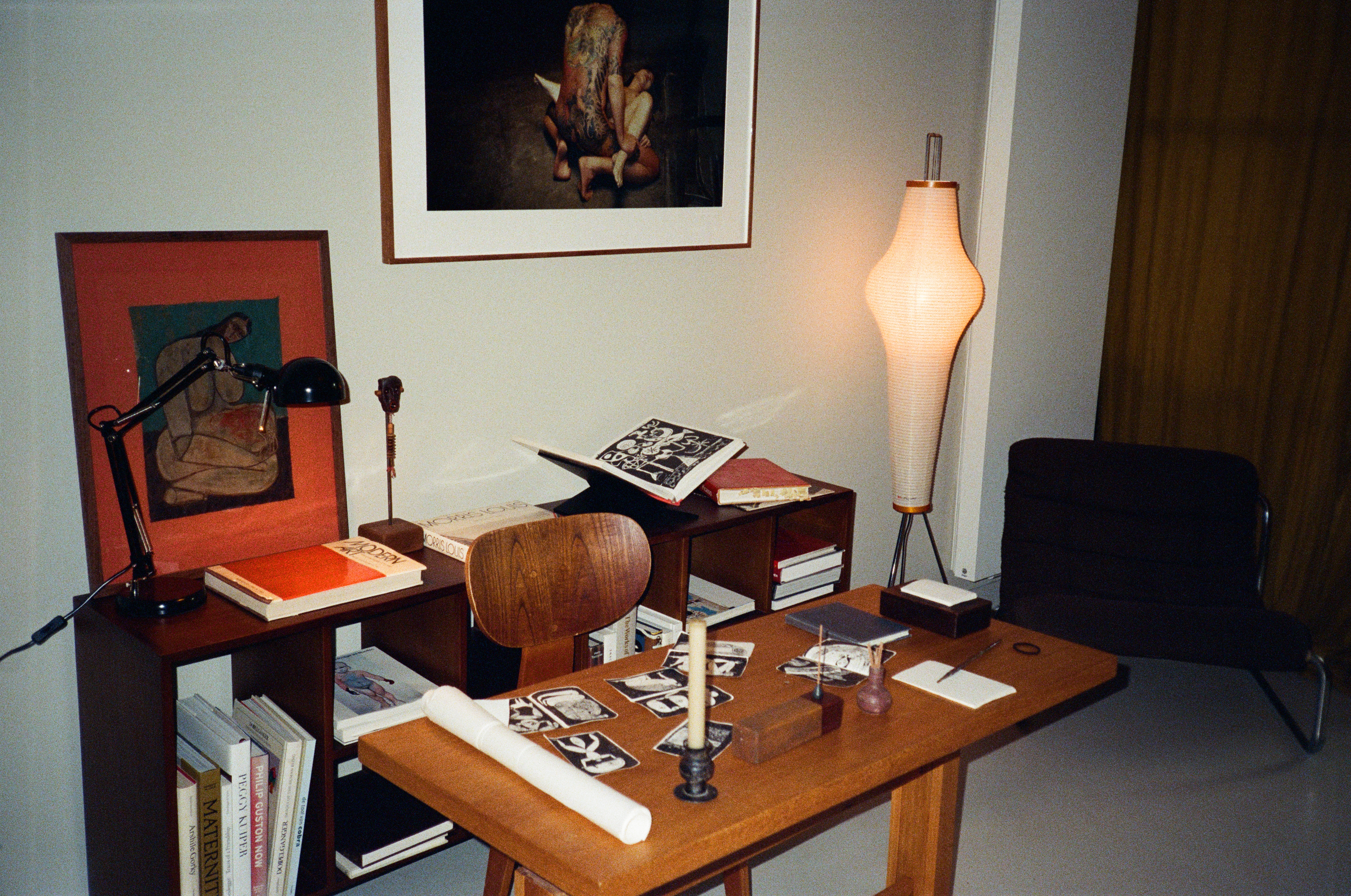
I collect African art, mainly sculptures and masks, because they resonate with me on a deep emotional and intuitive level. I am drawn not only to their visual presence, but also to the energy, ritual, and human craftsmanship they carry within them. I am fascinated by the way they continue to hold energy and meaning long after their original context of traditional rituals and ceremonies. For me, these sculptures feel alive in a certain sense.
Among the traditions I feel most connected to the Lega mask, Baule mask, and Dan mask. Each of them has its own atmosphere and emotional language, yet they all share a strong spiritual and sculptural presence that deeply attracts me. In particular, I feel very connected to Lega masks. Originating from the Lega people of the Democratic Republic of Congo, these masks are closely tied to the Bwami society, a system centered around moral teachings, wisdom, and initiation. I think there are many visual parallels between these masks and the masks of my own artistic practice. Themes such as introspection, symbolism, ritual, and inner transformation strongly resonate with the way I approach painting.
At the same time, I only discovered these masks later in life. Their influence on me did not come from direct imitation. Although people might see similarities between these masks and the faces or forms that appear in my paintings, the masks within my own work come from a different internal place. They are not based on existing cultural objects or specific traditions, but emerge intuitively through emotion, memory, dreams, and subconscious associations. In that sense, the connection is more spiritual and emotional than literal.
“Do you believe in love?“
YES
“What is the last thing that made you laugh out loud?”
my dog Balou.
“In your workspace, do you need chaos or absolute order to be able to concentrate?”
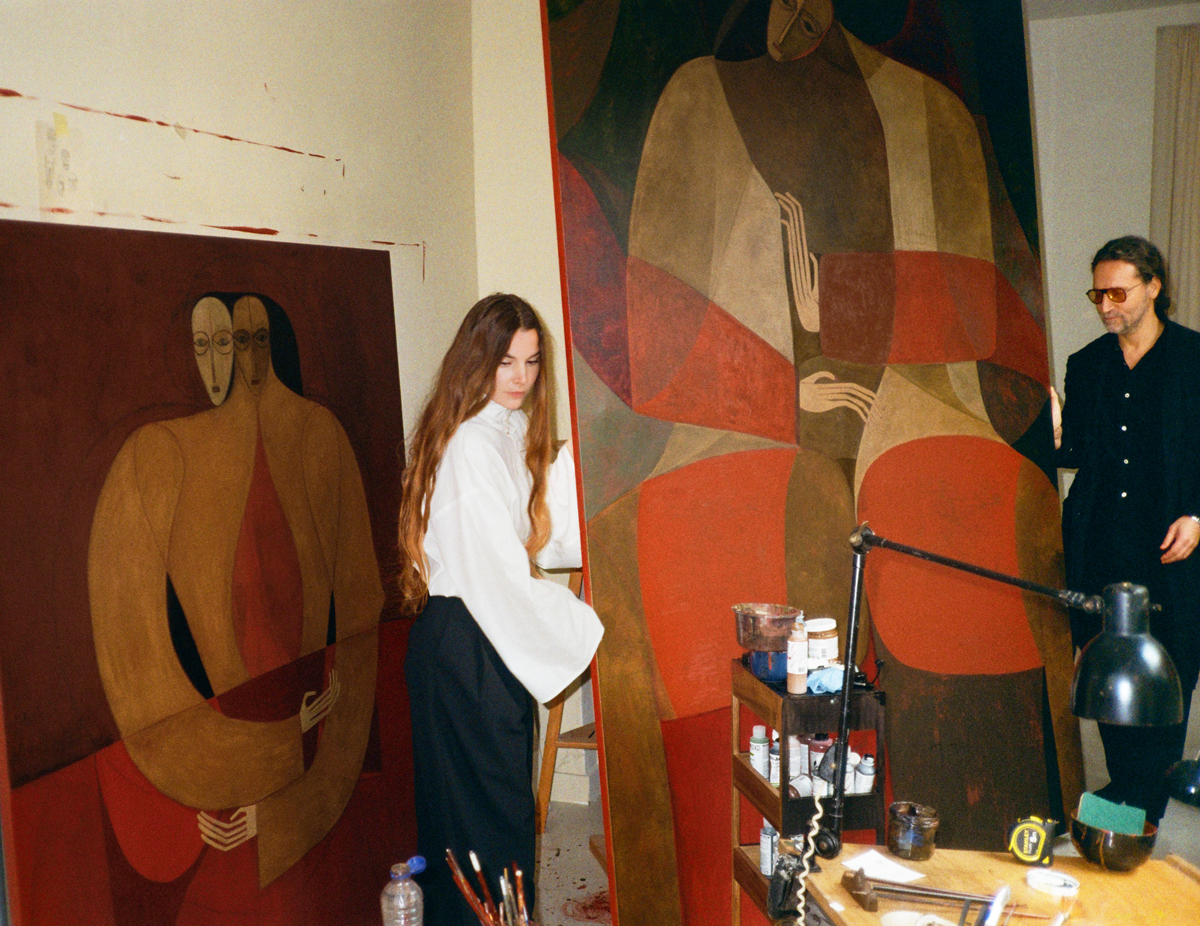
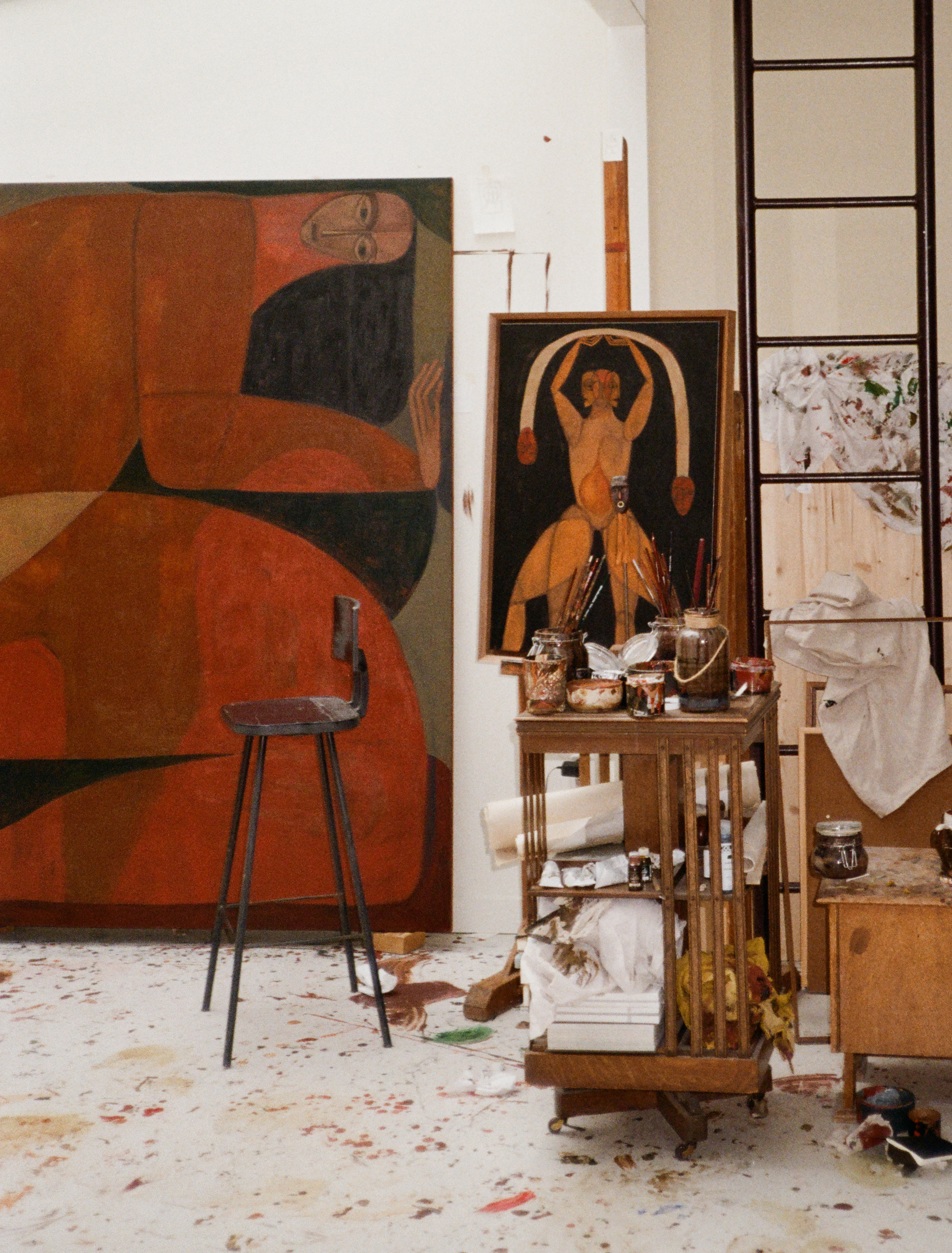
My studio. I need a certain form of organized chaos around me. Things need to become messy, layered, and imperfect so that I feel free enough to experiment. The space allows to create in a place where ideas can move naturally and unexpectedly. The physical disorder of the studio often mirrors the openness of the creative process itself. Paint, objects, sketches, materials, and unfinished ideas all become part of an atmosphere I feel comfortable with.
At the same time, despite this organized chaos, the studio itself remains a quiet and focused place. I do not work well with noisy distractions or too much outside stimulation. Light is another essential aspect of my working environment. I only work with natural daylight, because artificial light changes the energy and the way I experience color, texture, and mood within the paintings. Daylight gives the studio a living quality that constantly shifts throughout the day and the seasons. Because of this, spring and summer are the periods in which I naturally spend much more time in the studio. The longer days and softer light give me more energy and make me feel more connected to the work. In contrast, during winter, when darkness arrives early, my rhythm changes as well. Once it becomes dark outside, I usually stop working. I like the idea that my process follows a natural rhythm connected to daylight and the passing of seasons rather than forcing productivity at all hours.
What I value most about the studio is that it is large enough for me to build an entire world around myself. It becomes an immersive environment where I can live alongside the paintings while they develop. I need enough distance and space to look at the work, reflect on it, and emotionally enter it again. Sometimes simply sitting quietly in the studio and observing the paintings becomes just as important as actively painting. The space allows me to step into a dialogue with the work and with myself.
“Is there a book or movie that marked a before and after in how you view life?”
There is one film that recently left a strong impression on me: Perfect Days by Wim Wenders. The film follows Hirayama, a middle-aged public toilet cleaner living in Tokyo, as he moves through his daily routines and quiet existence. On the surface, very little seems to happen in the film, yet that is exactly what makes it so powerful to me. It focuses on the beauty hidden within ordinary life and the emotional richness that can exist within simplicity, routine, and attention to small details.
What moved me most about Hirayama’s character is that he hardly expresses himself through words, yet his entire way of living communicates something deeply human and emotional. Through his routines, his appreciation for music, books, photography, trees, light, and everyday encounters, he creates a life that feels meaningful and rich without needing excess or constant stimulation. The film shows how someone can quietly shape their own world and find beauty within even the smallest moments. I found that very touching because it reminded me that a meaningful life is not necessarily defined by big achievements or dramatic events, but can also be found in presence, sensitivity, and the way we choose to experience everyday life.
Visually, the film is incredibly beautiful. The stillness of the scenes, the pacing, and the attention to light and atmosphere create a meditative feeling throughout the movie.
I think what stayed with me most after watching the film is the way it reflects on how we shape our own lives through small choices, habits, and ways of seeing the world. Hirayama’s life may appear simple from the outside, but emotionally and spiritually it feels very rich and intentional.
Piece with Artist Magazine. may 2026. © www.piecewithartist.com
@piecewithartist
@PEGGY_KUIPER