Danny Gretscher

WORDS BY TOBY SCHMITZ. PHOTOGRAPHY BY DANNY GRETSCHER.
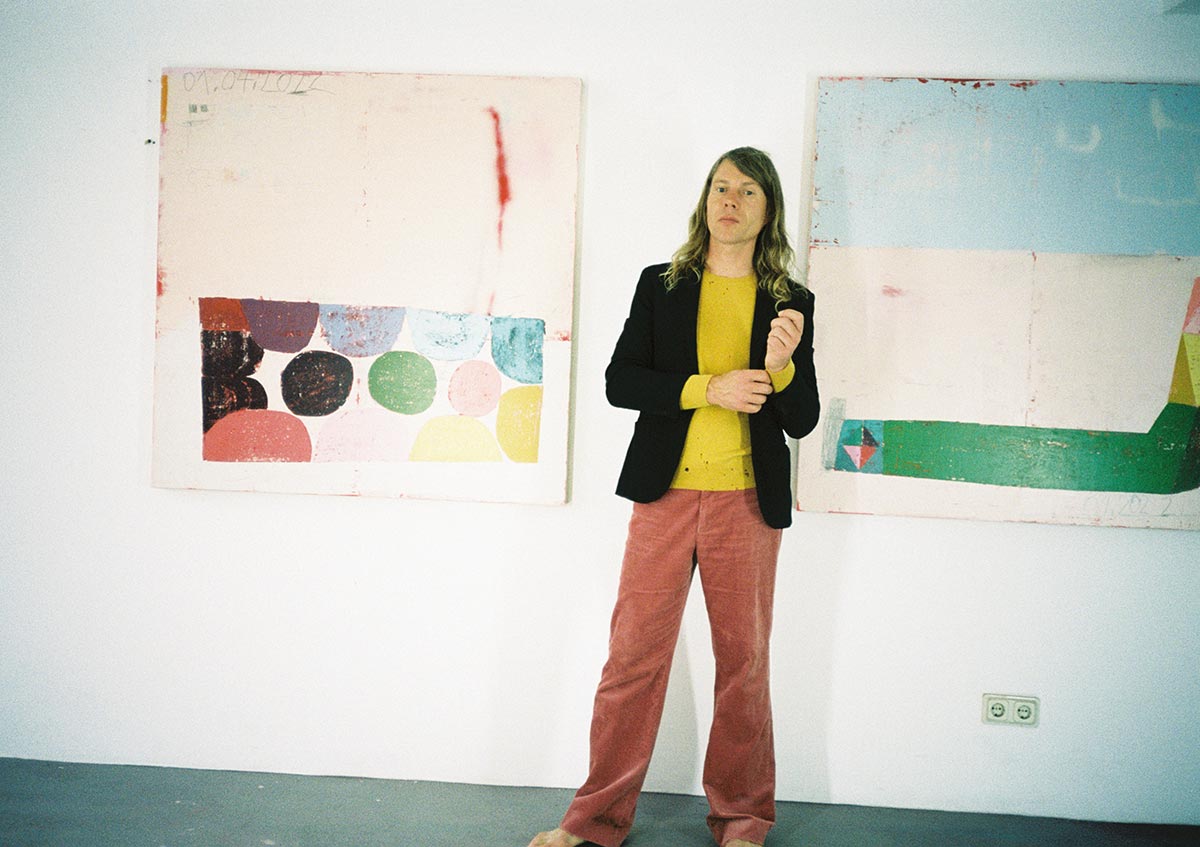
Standing in front of a Gretscher is spellbinding. It comes replete with its own vocabulary: a constellation of symbols, characters and allegories that describe a wholly original world, which simultaneously reveals a fraction – often subtle but sometimes stark – of our own. This language has layers and has become even more intricate over the past decade, but the core of abstract figures continues to be totemic, with all the power that this word implies.

“Sometimes I get these impulses from somewhere deep in the universe, which occur to me as emotions. I dress these sensations in colour, and sometimes drawing just a few lines is enough to make them visible all of a sudden.”
I see travellers, heroes, lovers and the occasional villain. I see gods -minor, apex and more recently, avian- all radiating and in dialogue with Gretscher’s ready, unique thesaurus. From one angle, there are tantalisingly mysterious conversations, and from the next, others that are completely identifiable with the human story. Even the literal titles continue to reflect new interpretations as you mull them over. For me, his pieces bristle with the unfathomable magic of the Shakespearean canon: at the same time unparalleled yet humanist. His colour, his organic delicacy, his mighty and meek symbols, all smack of an incredible story, of lasting drama.
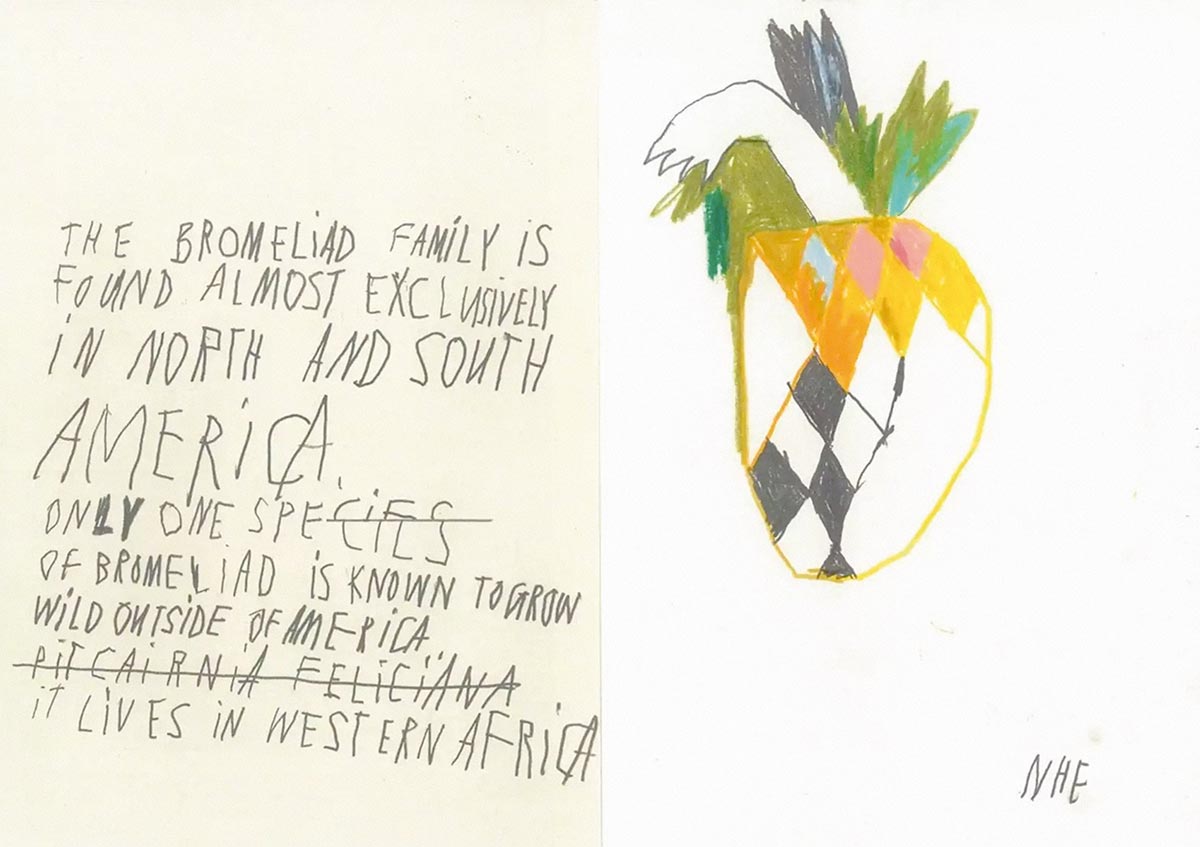
Your paintings seem to be somewhere between the abstract and the figurative. Such as your painted wood sculptures: they are somewhere between painting and sculpture. Do you like to be between two worlds? Is that what your works talk about?
I think we are all between worlds. Right now we are between birth and death, but what happens on the other side of the coin, be- tween death and birth? We are between day and night, between waking up and going to sleep, but what happens between going to sleep and waking up?
We are between the past and the future, which means we are in the present. In English this word has two meanings: the present time or moment and a gift that you give to someone. Which means that this moment, that every gi- ven moment is a present, a gift. And if you understand that, you understand a lot already. Because the past is not here anymore, and the future is not yet here. It’s all about the here and now.
But going back to my paintings and sculptures, a friend of mine once told me that he had the feeling I was always floating 10 cm above the ground. It’s interesting how you are seen by others and how others see my work, because for me what I do is just natural. Even the paintings and sculptures. It all starts with an idea, a feeling. Sometimes it’s just a line. Sometimes it’s a shape, a pattern
or a sketch I use as a guide. Then it grows into a painting, like a river grows from the source all the way to the ocean. The river may look wild from the outside, but it just is the way it is. For the river, it’s just a natural state of being.
When I started painting, the figurative was always there: I wasn’t looking for it. I was always fascinated with drawing bodies, playing with proportions and leaving parts out, like old Greek sculptures with missing arms or legs. It suddenly becomes another interesting form. And that is where it gets interesting in the eye of the beholder and where questions begin.
When it comes to sculptures, there is a quote by Max Ernst, who said: “When I need holiday from painting, I do sculptures.” That’s a beautiful way to see it. As a human or as an artist, even if I’ve found my field, I don’t́ want to limit myself. The interesting thing about doing sculptures is that it adds another dimension.
Would you be able to place your paintings in a specific space or site?
I think that would have to be a very traditional place, like the Dali Museum in Figueras. I would love to have a house with garden where I could invite friends, architects and gardeners to work there for a year or two in order to create our own little cosmos. I’m still not sure where in the world that place would be because there are so many beautiful places on Earth.
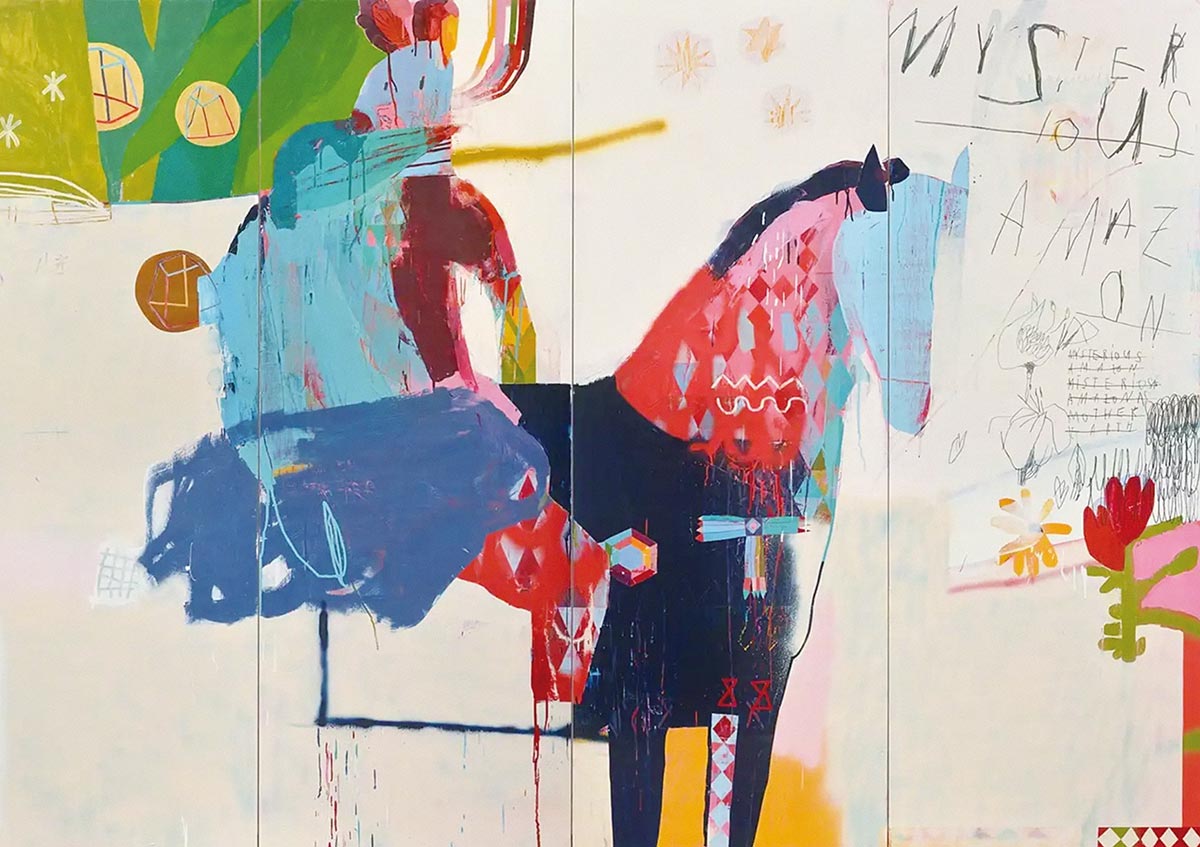
Do you remember what you painted as a child? Do you think there is any relationship to what you do now?
To be honest, I didn’t paint much as a child. I don’t think I really started painting until I started skateboarding and doing graffiti when I was 16 years old. So I can’t really say that there’s any relationship between what I painted as a child and what I’m doing now. I think I was more influenced by the skateboard culture, by graffiti writers and by young American artists who started becoming big in the mid- 90s. Such as all the artists who were involved in the Beautiful Losers exhibition curated by Aaron Rose. That was for sure very inspirational to me and many others.
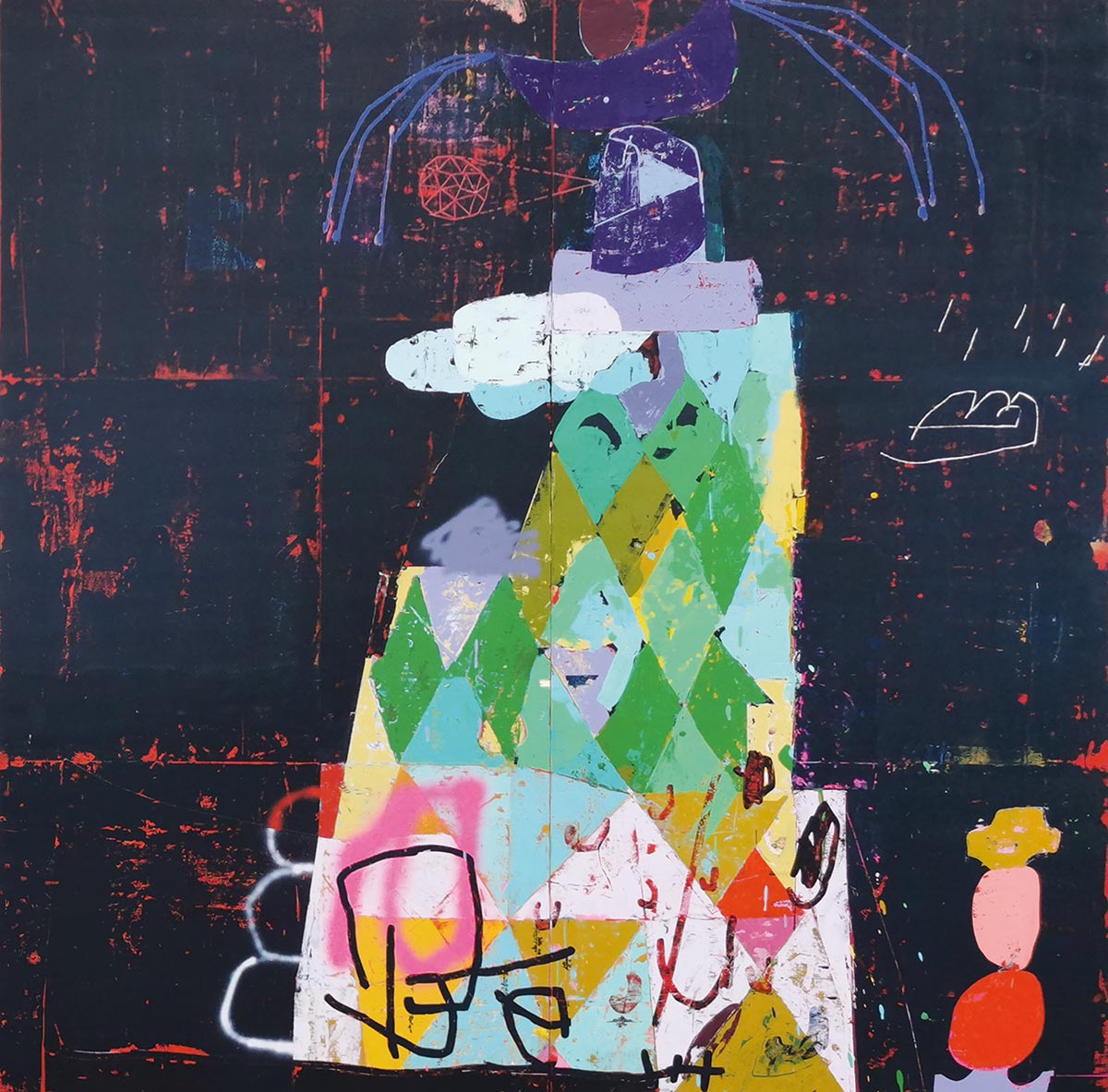
What would you say is your source of inspiration?
Life itself. When I went to Australia for the first time to see friends, I also went to the subtropics and was blown away by the variety of plants, fruits, shapes, smells and flavours. Like, I saw a palm tree and you think, “Yeah right, a palm tree”, but then you see another palm tree in a different shape and you think wow that’s an interesting shape
too. And then you ask yourself how many different kinds of palm trees there are.
I didn’t do many drawings that time, but it’s interesting that two weeks after arriving back in Germany I bought a new sketchbook and coloured pencils, and within a week or so the sketchbook was full. All of a sudden, all the impressions I had amassed during that time in the jungle just came out in the form of drawings, and my paintings started to get more floral and abstract at the same time.
Then there was the time in Australia I spent close to the sea. I went to the beach every day. And every time, I went for a swim or just for a walk. As I walked down the dunes, I realized that the colour of the water was different every day, yet similar, depending on the light, the time of day and the weather. When I went to an art supply shop looking for paint, I found a colour —a kind of a blueish turquoise— that was exactly the colour of the ocean in the morning.
Awareness at times like these is what you could call my inspirational source. And these moments add up to what life itself is.
In 2010 you opened an exhibition called “What it means to be human”. What does it mean to be human?
I’m still trying to figure that out.
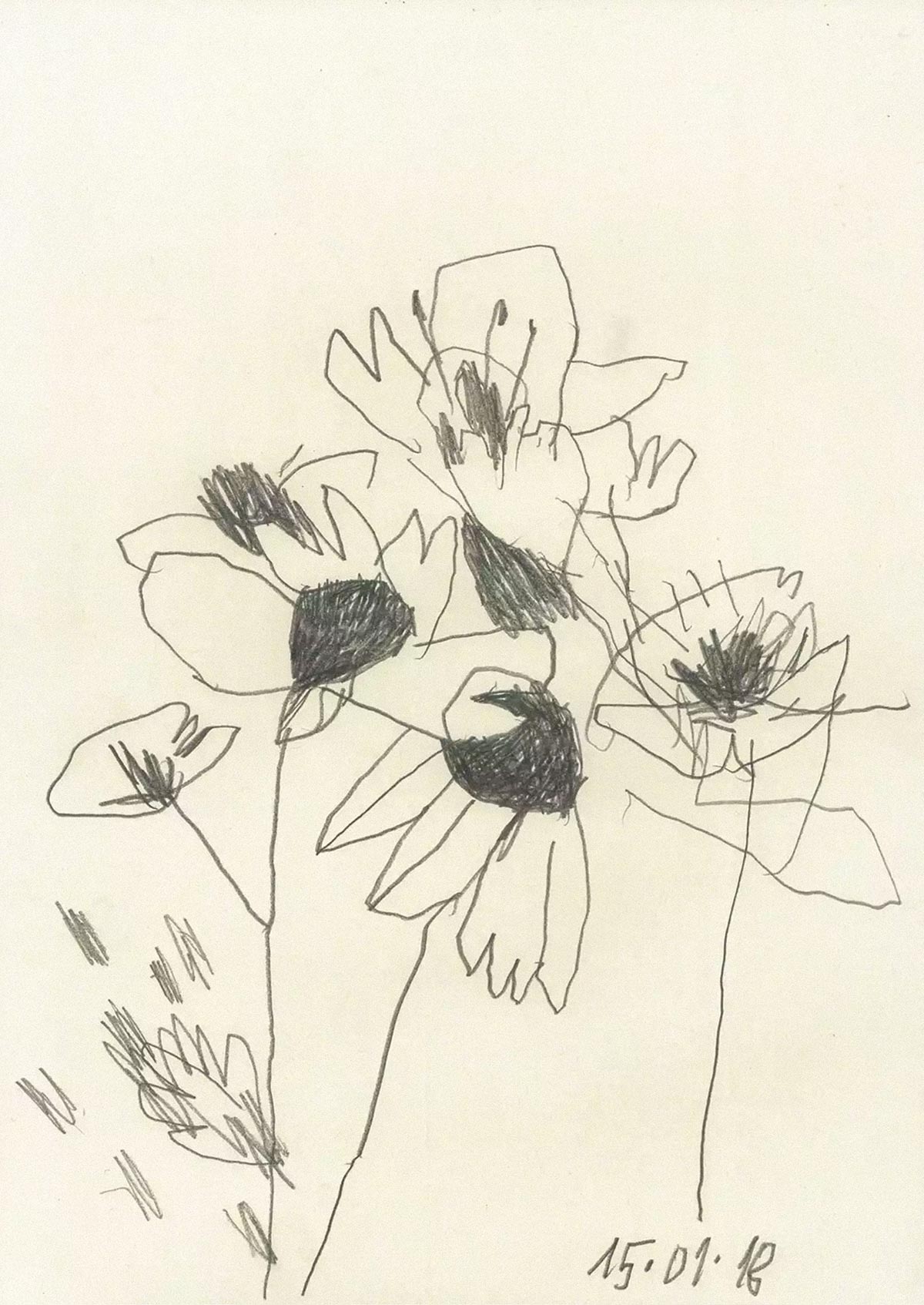
If there’s any difference, what does it mean to be an artist?
Joseph Beuys said “Every human is an artist”, and Martin Kippenberger said “Every artist is a human.” There is so much art and so many artists. There are conceptual artists who sit in their offices and write concepts or essays. There are artists who are clever businessmen or women. You could say that these artists / people are more head-based. And there are artists who are intuitive people. You could say that these artists / people are more heart- based. But neither is better or worse than the other. As a heart- based artist you need to be head- based too, because you have to be able to show and sell your work. On the other hand, you wish that head-based artists would be more heart-based so that conceptual art wasn’t so cold and grey sometimes. It’s about bringing the elements into balance. The field of art is as different as there are different people, and you are attracted by whatever talks to you.
But no matter how you look at it, I think at the end of the day, what counts is the quality you put out there. I think that’s what lasts the longest, if there is such thing as time. Everything has its time, and everything has its place.
www.dannygretscher.com
@dannygretscher
Piece with Artist MAGAZINE ISSUE 00. JUNE 2022. © www.piecewithartist.com

ADVERTISEMENT


