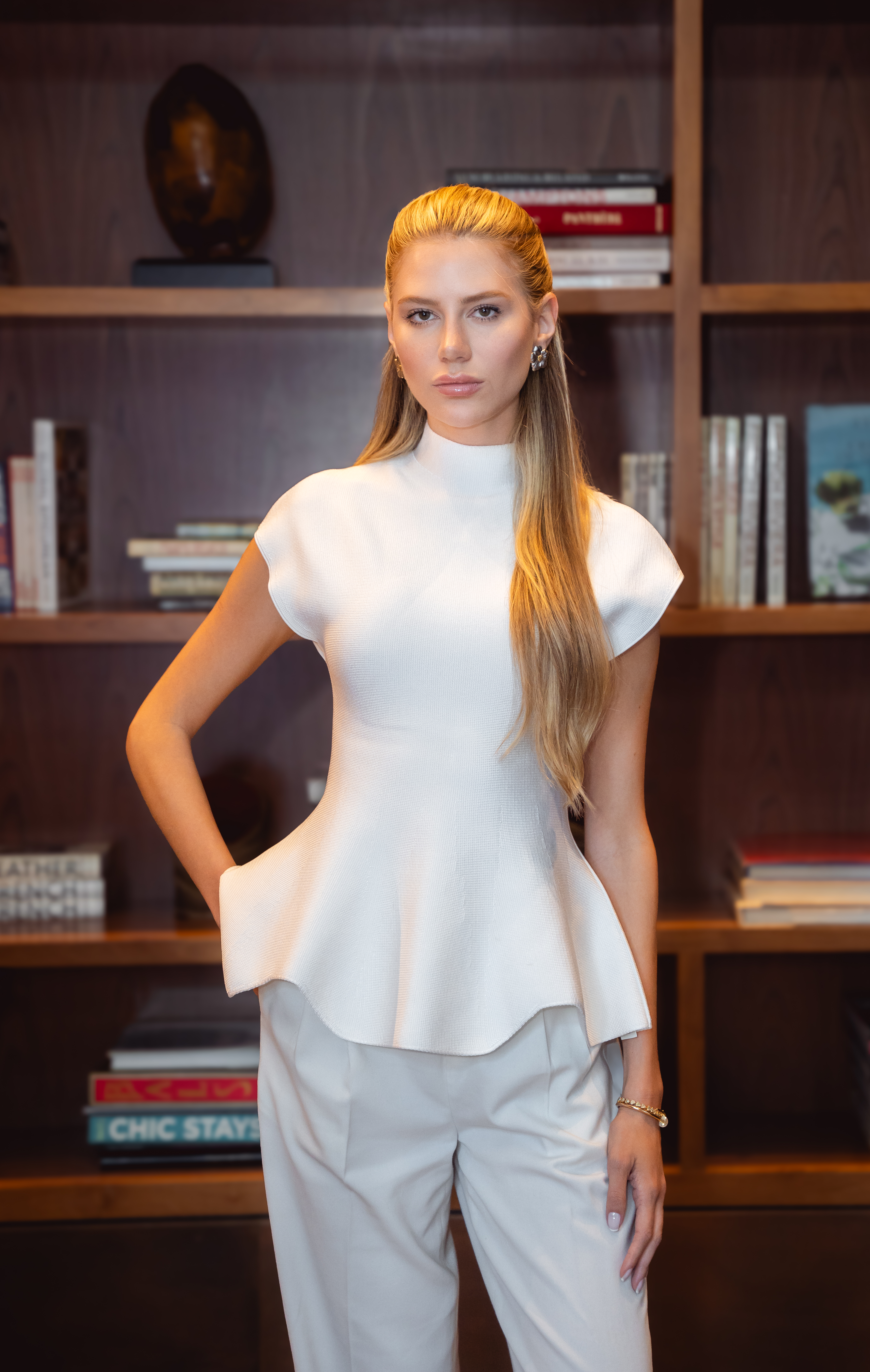
OCTOBER, 2026. WORDS by REBECCA FERREIRA. Piece with artist magazine.
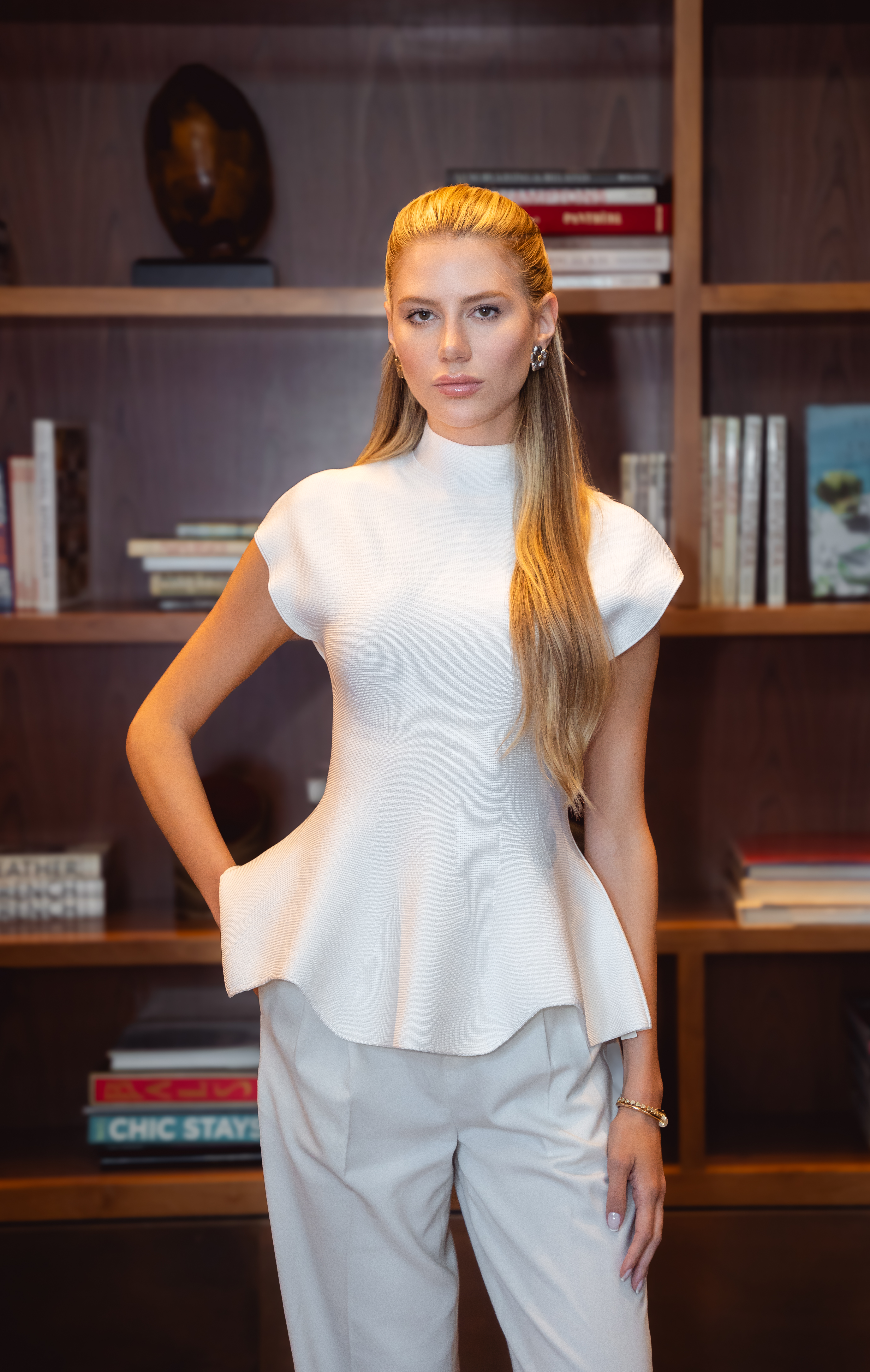
Before Consensus: Sophia Loeb, Laís Amaral, and Thalita Hamaoui, by Rebecca Ferreira (@rivka_artadvisory)
At Piece With Artist Magazine, we observe with attention that instant in which a work still trembles, and Rebecca Ferreira, art advisor and founder of Rivka Art Advisory, is a specialist in this. Capable of having built a vision of her own within contemporary art, her work consists of looking at works from another place and perspective; that way of looking, so personal and so uncommon, has made her a reference when it comes to spotting talent. From that sensibility, she proposes three very interesting names for this edition of Curatorial Picks: Sophia Loeb, Laís Amaral, and Thalita Hamaoui, three Brazilian women, three distinct ways of seeing.
One of the most interesting parts of working as an art advisor is learning to look before consensus is fully formed. Collectors often ask what makes an artist worth paying attention to. There is rarely one answer. A strong gallery is not enough. Neither is an institutional exhibition, a waiting list, an auction result, or a sudden wave of attention. What interests me is the intersection of several things: a distinct visual language, consistency in the practice, institutional recognition, thoughtful representation, and, perhaps most importantly, the sense that an artist’s work still has somewhere to go.
Brazil is particularly interesting to observe through this lens today. The country has an extraordinarily layered artistic history, yet the international market still tends to circulate a relatively narrow group of Brazilian names. Part of my work between Brazil and the international art world is to keep that field of vision open: to look closely at practices developing inside Brazil and across the Brazilian diaspora, and to bring those conversations to collectors and audiences abroad. For this selection, I chose three Brazilian painters at different points in their trajectories: Sophia Loeb, Laís Amaral and Thalita Hamaoui.
“These are not predictions of financial performance. They are three practices whose work, trajectories and current momentum make me want to keep looking.”
01 — Sophia Loeb
When recognition begins to accelerate
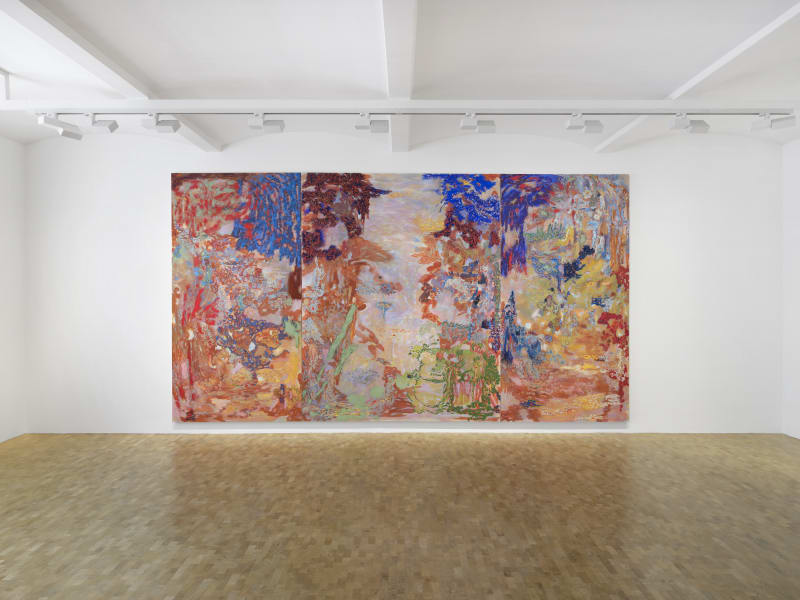
Sophia Loeb is perhaps the clearest example of what I look for when an artist is entering an important phase. Born in São Paulo in 1997 and educated at Goldsmiths and the Royal College of Art in London, Loeb has developed a highly physical approach to painting. She rotates and tilts her canvases, building, scraping and reworking layers of liquid and powdered pigments and oil stick. The resulting paintings move between landscape and abstraction without fully belonging to either. What makes her trajectory particularly interesting to me is that the artistic language and the external validation appear to be developing together. Her recent solo exhibitions in London and Rio, together with acquisitions by significant collections and institutions, suggest that recognition is widening while the career remains young. When evaluating an emerging trajectory, I am less interested in one isolated moment of visibility than in whether several independent forms of recognition begin appearing together: galleries, institutions, curators, collections and increasingly ambitious exhibitions. With Loeb, that process is visible while much of her institutional history has yet to be written. That is precisely the stage I find most interesting to watch.
02 — Laís Amaral
Abstraction carrying more than abstraction
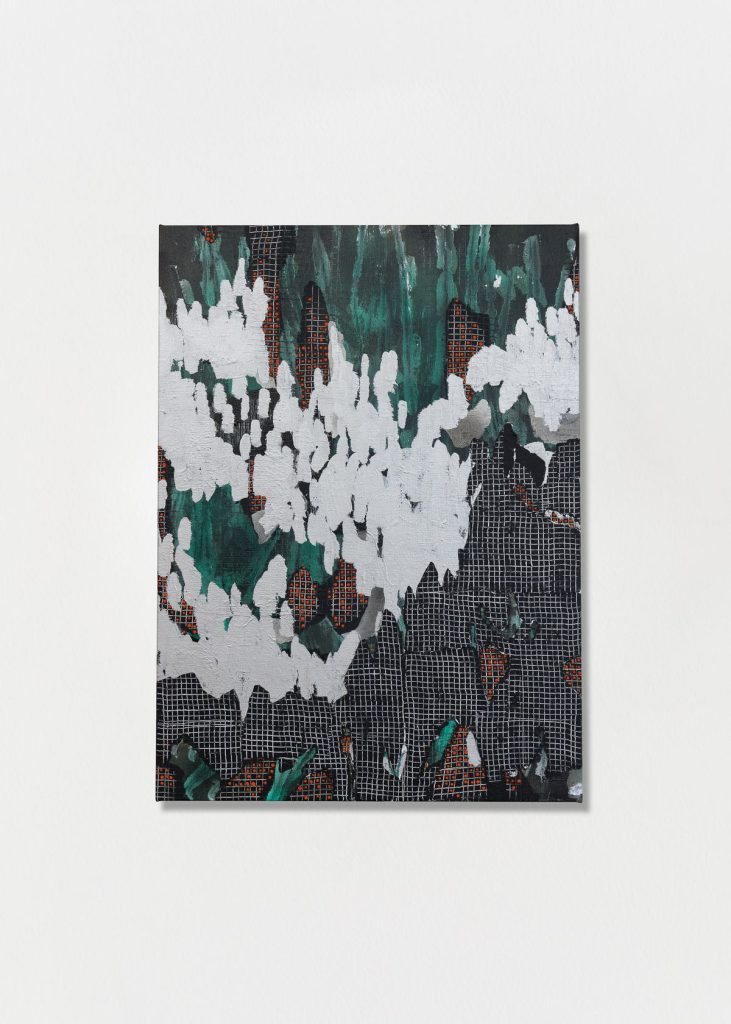
Laís Amaral offers a different proposition. Born in São Gonçalo in 1993, she is self-trained and began her artistic career in 2017. Her practice complicates conventional distinctions between abstraction, craft and lived experience. Her surfaces are built through layering and excavation. Paint is applied and removed, and unconventional tools become part of the process. Beneath their immediate visual force are questions connected to environmental degradation, race, gender and the social landscape of Brazil. This is one of the reasons I find her work compelling. A painting can attract you from across a room. But the works that sustain attention usually give you another reason to remain once you arrive. Her trajectory has also begun to move beyond Brazil through exhibitions in New York, Brussels and Los Angeles, alongside institutional contexts in Brazil and abroad. For an advisor, this is an important distinction between visibility and trajectory. Visibility can happen quickly. A trajectory is built when the practice continues to generate serious contexts in which it can be reconsidered. Amaral appears to be entering precisely that conversation.
03 — Thalita Hamaoui
Growth does not always mean youth
Thalita Hamaoui represents another phenomenon that collectors sometimes overlook: an artist worth watching does not necessarily have to be at the beginning of a career. Sometimes the more interesting moment occurs when a mature practice enters a new international chapter. Born in São Paulo in 1981, Hamaoui has developed a universe of imagined landscapes in which botanical forms, memory, color and abstraction coexist. Her paintings do not reproduce nature literally; they transform it into something psychological, sensory and almost mythological. Recent international presentations have placed that language into a broader art-historical and market conversation. This matters because it moves the discussion beyond whether a painting is immediately seductive — which Hamaoui‘s can be — and toward where the work may sit within a longer history of painting. Her inclusion is therefore deliberately different from Loeb‘s. Momentum is not synonymous with emergence. Sometimes what deserves attention is an established practice encountering a larger international audience.
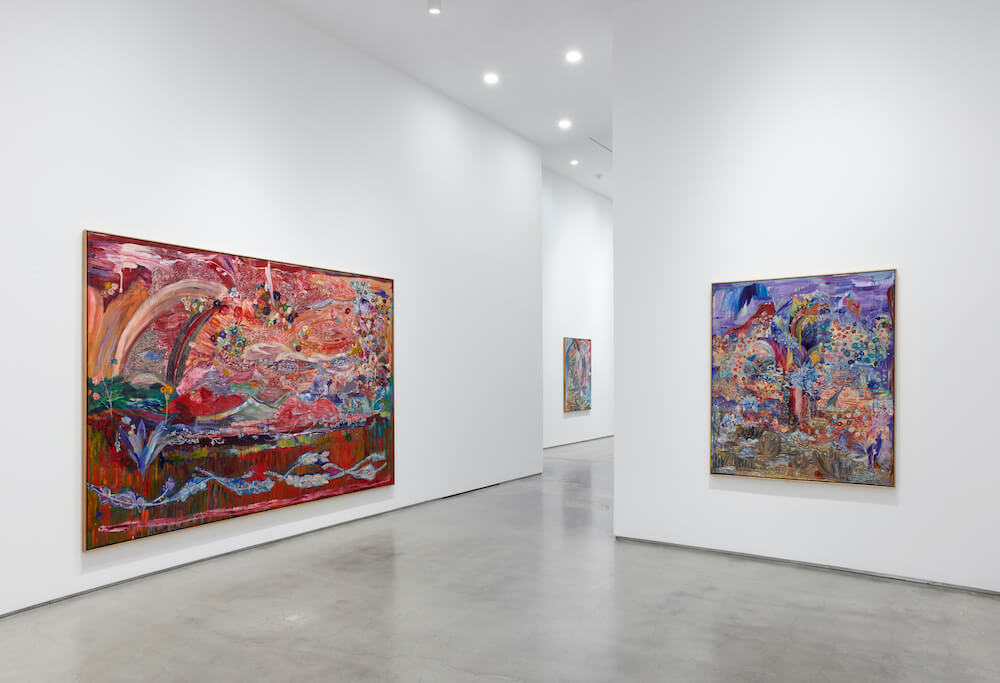
These three artists occupy different moments, and that difference is central to my selection. With Sophia Loeb, I see a young practice receiving increasingly serious international and institutional recognition. With Laís Amaral, I see an individual language moving from a specific Brazilian context into a broader international conversation. With Thalita Hamaoui, I see a mature practice entering a new phase of international visibility. Together, they also point to something larger. Brazil should not be understood internationally through a fixed canon or a handful of already familiar names. There are artists working across generations whose practices can participate in global conversations without losing the complexity of where they come from. As a Brazilian art advisor working internationally, that is part of what interests me most: creating bridges. Not simply exporting a category called “Brazilian art,” but helping collectors look more closely at artists from Brazil as individual practices capable of occupying museums, collections and conversations anywhere in the world. Art history is not linear, and neither is the art market. None of these signals determines an artist’s future. But collecting thoughtfully requires more than responding to what has already been validated by everyone else. It requires looking closely at the work, understanding the context around it, and recognizing when artistic conviction and external momentum begin to intersect. For me, Sophia Loeb, Laís Amaral and Thalita Hamaoui are three Brazilian women artists worth watching closely as that story continues to unfold.
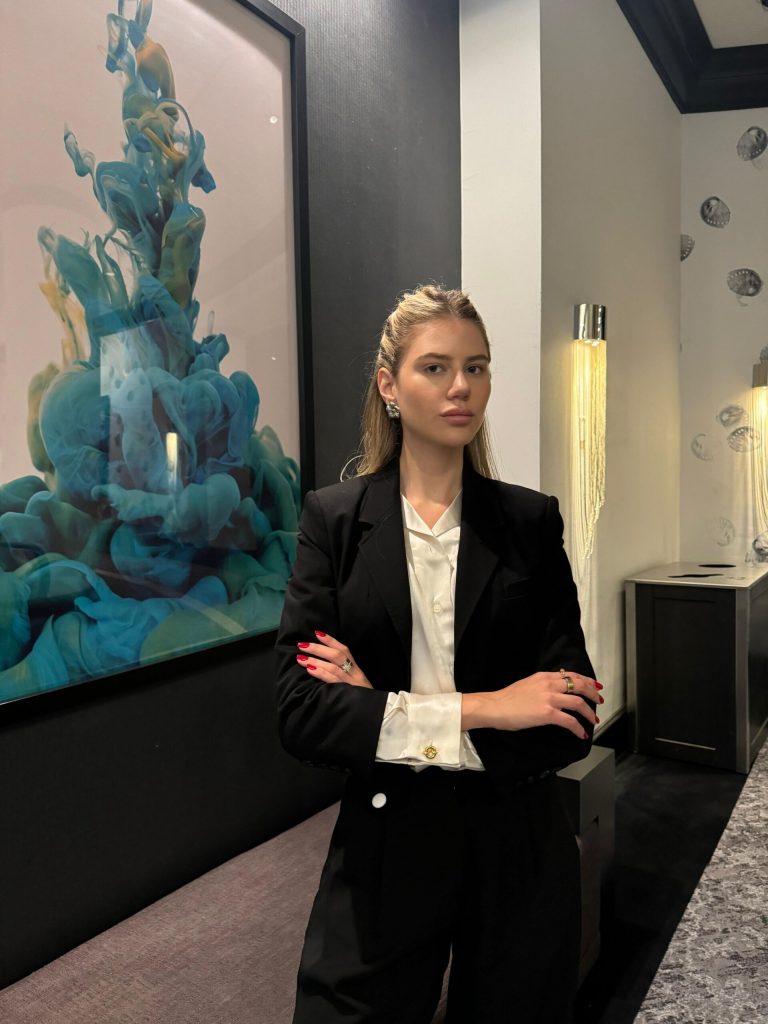
Rebecca “Rivka” Ferreira is the founder of Rivka Art Advisory, an independent art consultancy advising private collectors across the United States, Brazil and Latin America. Based in New York, she guides her clients through acquisitions, private sales and the development of collecting strategies, with a particular focus on bringing Latin American art closer to collectors around the world. Her profile combines a background in business and finance with postgraduate training in the art market.
www.rivka-artadvisory.com
Piece with Artist MAGAZINE © october 2026
@piecewithartist
@RIVKA_ARTADVISORY