Ryo Koizumi
PAINTER. FUKUSHIMA. JAPAN
RYO KOIZUMI EXPLORES THE NATURE OF EXISTENCE THROUGH PAINTING, DRAWING INSPIRATION FROM WESTERN ART AND PHILOSOPHY, AS WELL AS EASTERN THOUGHT, PARTICULARLY ZEN. HE USES BODILY REPETITION AS THE FOUNDATION OF HIS PRACTICE, EXPLORING HOW DIFFERENCES EMERGE THROUGH REPEATED ACTIONS AND HOW THEY REVEAL THE CHANGING NATURE OF THE SELF AND EXISTENCE. HIS WORK ALSO ADDRESSES THEMES SUCH AS THE ELUSIVE NATURE OF LIGHT, THE MULTIPLICITY OF EXISTENCE, AND THE RELATIONSHIP BETWEEN THE SELF AND OTHERS. STARRING RYO KOIZUMI WWW.GREENANDBLACKSMITH.COM
PHOTOGRAPHY COURTESY OF RYO KOIZUMI
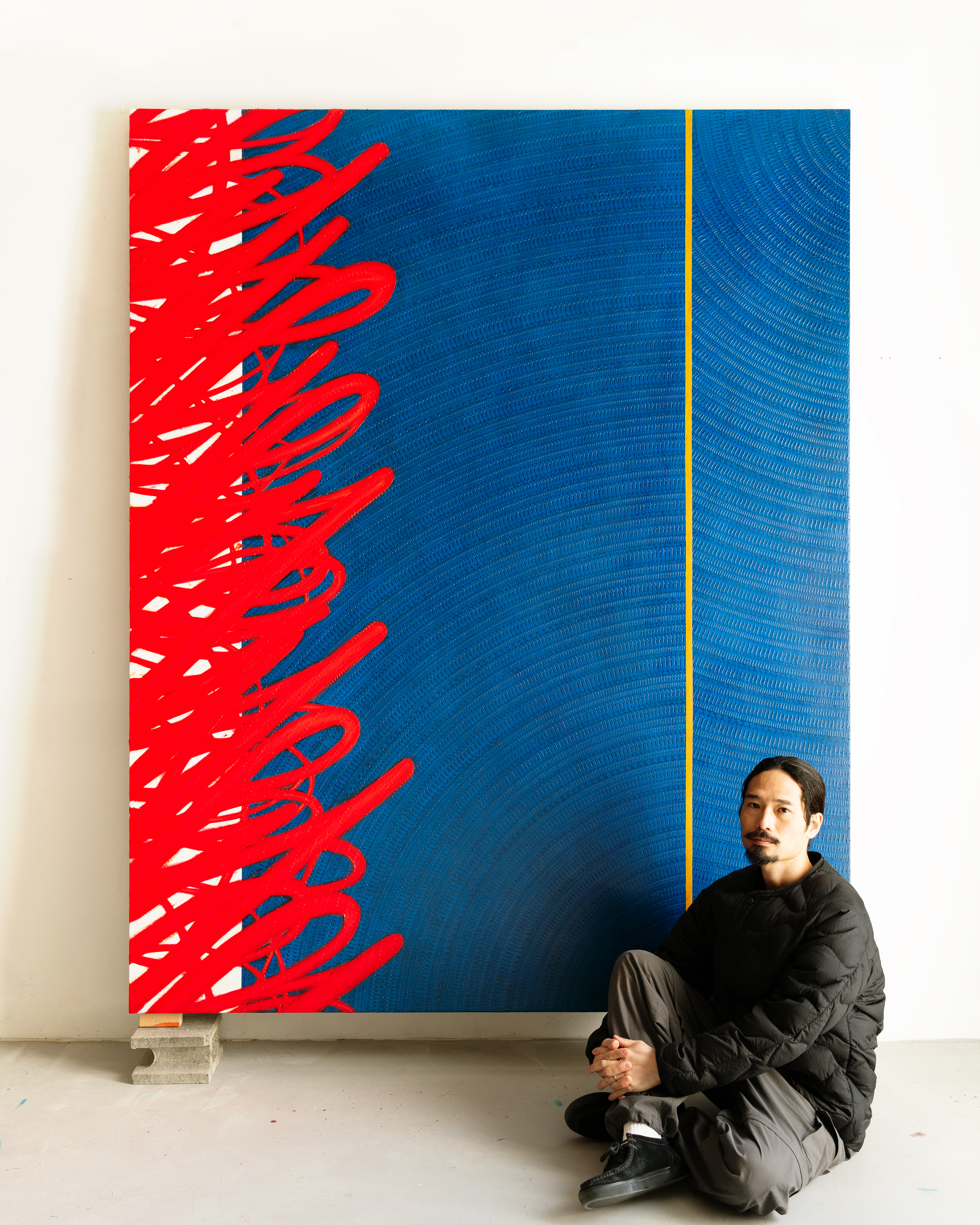
“Could you define your work? Where are your latest paintings heading? Tell us a little about your style.“
Through the physical act of painting, I continue to question my own existence. My process is intuitive–I don’t think I could create any other way as it is very freeing for me. I encourage the viewer to not search for meaning or a message in my work, but to “just be” with the work. Whatever comes up for the viewer is valid. My hope is that the viewer connects with this sense of openness.
In 2011, I experienced the Great East Japan Earthquake in Fukushima Prefecture, where my home is located. This experience made me acutely aware of life and death. It also led me to become interested in Eastern thought, particularly Zen, as well as the question of “What is existence?” that Western philosophy has explored throughout its history.
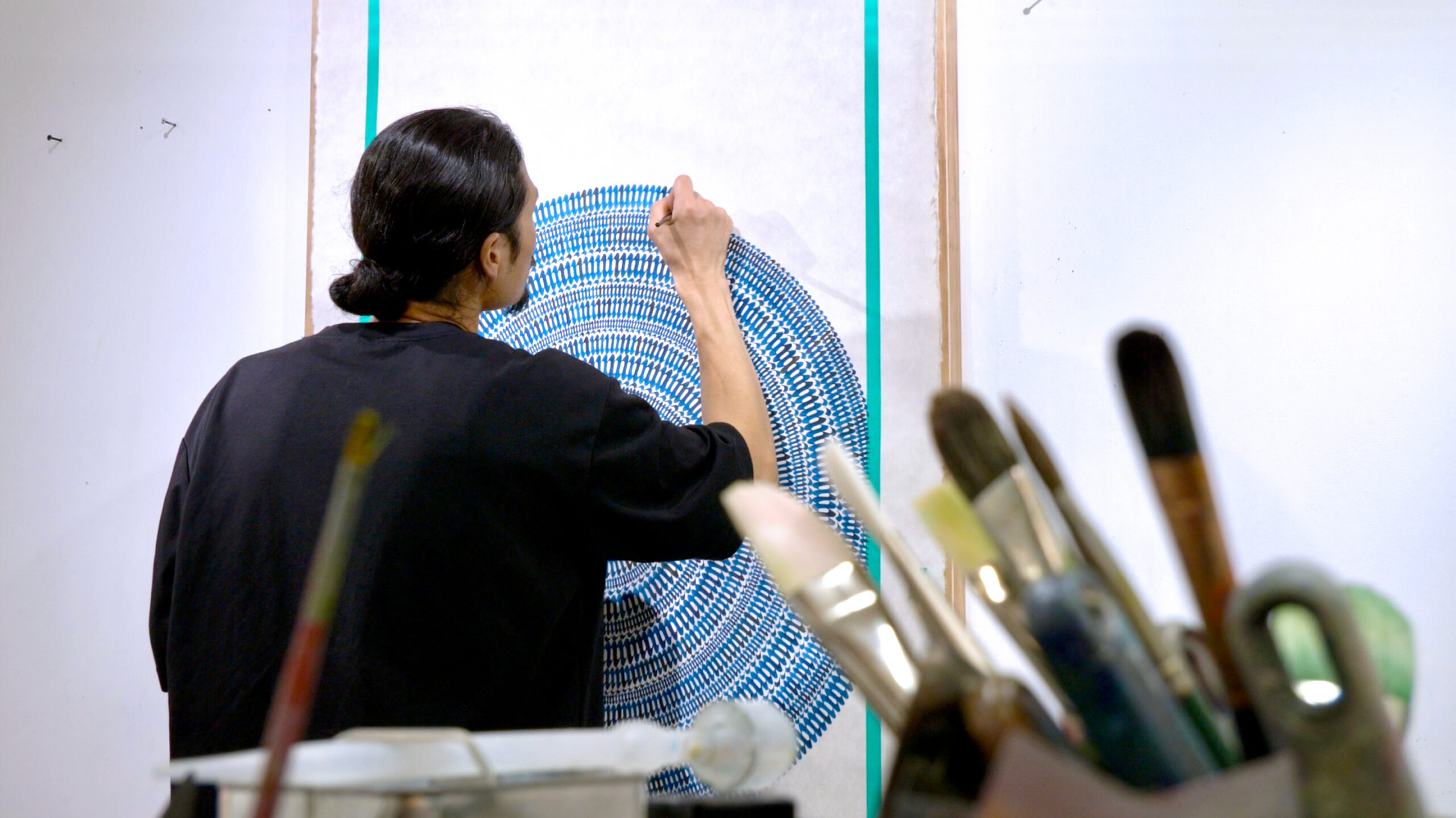
At the core of my practice is the act of repetition. Through repeating the same gestures, I perceive the passage of past, present, and future as a cyclical structure without a beginning or an end.
We tend to perceive ourselves as the same person over time, but in reality, we are constantly changing. Even when we repeat the same action, our physical and mental states are never quite the same. For me, repetition is a way of recognizing how my own existence changes through the differences that emerge in the process.
I am also interested in light, which is always present before us yet whose substance remains elusive, and in the nature of existence itself, which cannot be confined to a single meaning but contains contradictions and multiple interpretations. These explorations are reflected in series such as Halo and Locus.
More recently, starting from my painting practice, I have expanded my interest to the space beyond the canvas and to relationships with materials such as stone, wood, and metal. These materials exist on different timescales from those of my own physical actions. By bringing them together, I explore the relationships between the self and others, and between different forms of existence that inhabit different spans of time.
“Do you work with fixed schedules or do you let your body tell you when to start and when to stop?“
My working hours are relatively consistent. I spend almost every day in the studio, working from after breakfast until before dinner.
At first glance, my practice may appear to involve repeating the same actions over and over. However, I myself change from day to day, and my physical sensations also vary depending on my health and mental state. In other words, the same version of myself can never exist twice.
It is precisely because I repeat the same actions that I become aware of the subtle differences and changes that emerge in the process. For me, repetition is not simply about doing the same thing again and again; it is also a process of discovering the differences that arise each time.
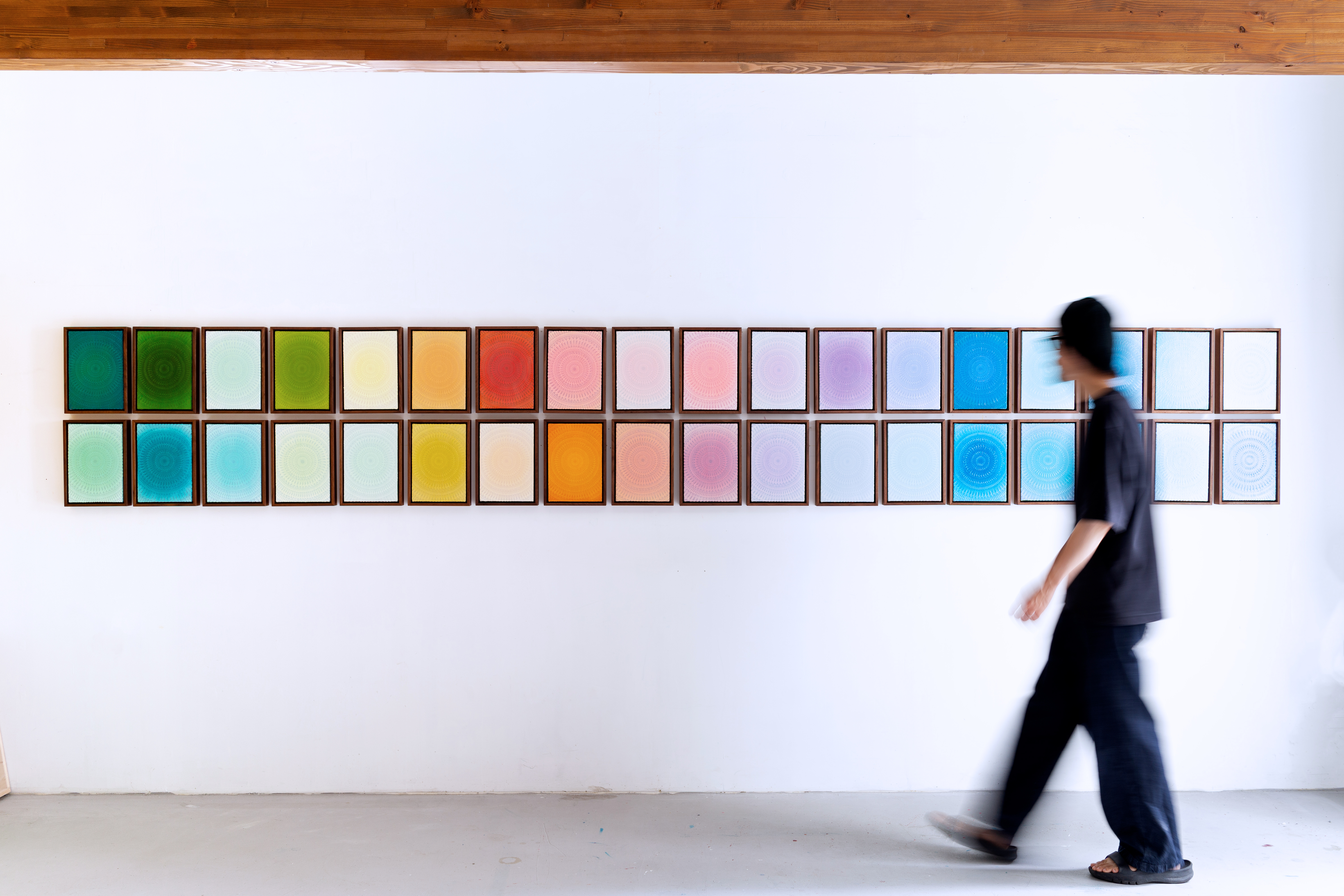
“What is the first thing you do when you enter the studio after several days without being able to go? Do you go straight to the easel or do you need to reconnect with the space?”
If I have a work in progress, I first spend some time looking at it. I reflect on what I have done so far and consider what I should do next.
It is a feeling of gradually regaining my awareness and motivation for making art as I spend time with the work.
In reality, however, I rarely stay away from the studio for an extended period. Since I work almost every day, the studio has become an integral part of my daily life.
“Do you need absolute silence to concentrate, or do you work with music, podcasts, or background noise? Does it change depending on the phase of the work?”
My studio is located in a quiet area of rural Japan. Compared with urban environments, the pace of life here feels slower, and I think it is an ideal environment for my practice.
For me, making art has something in common with a form of discipline or meditation. As I continue working, physical movement gradually takes precedence over conscious thought, and I find myself working in a state that comes close to the unconscious.
I sometimes play music or podcasts while working, although I cannot really say how they influence my work.
I think what matters is being able to concentrate deeply on my work, even when there are sounds around me.
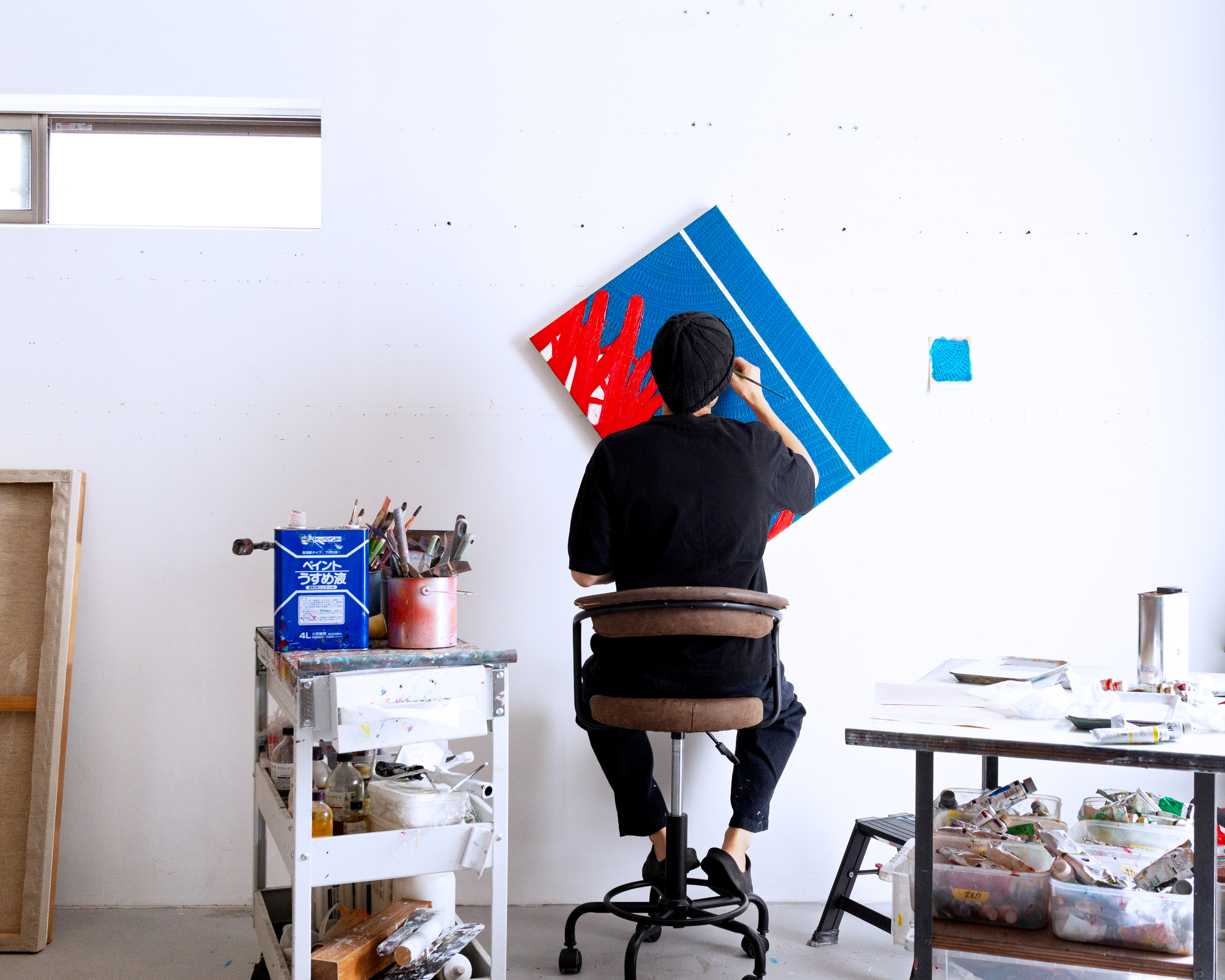
“Do you have a talisman object in the studio? Something that has nothing to do with painting but brings you luck or anchors you to reality.“
I do not have anything in my studio that serves as a particular good-luck charm. However, my studio is adjacent to my home, so my family is always close by.
When I become deeply absorbed in making art, my thoughts inevitably turn inward, focusing almost entirely on myself and my work. But everyday life with my family keeps me connected to the reality of the world around me.
Their presence is also one of the important driving forces that allows me to continue making art.
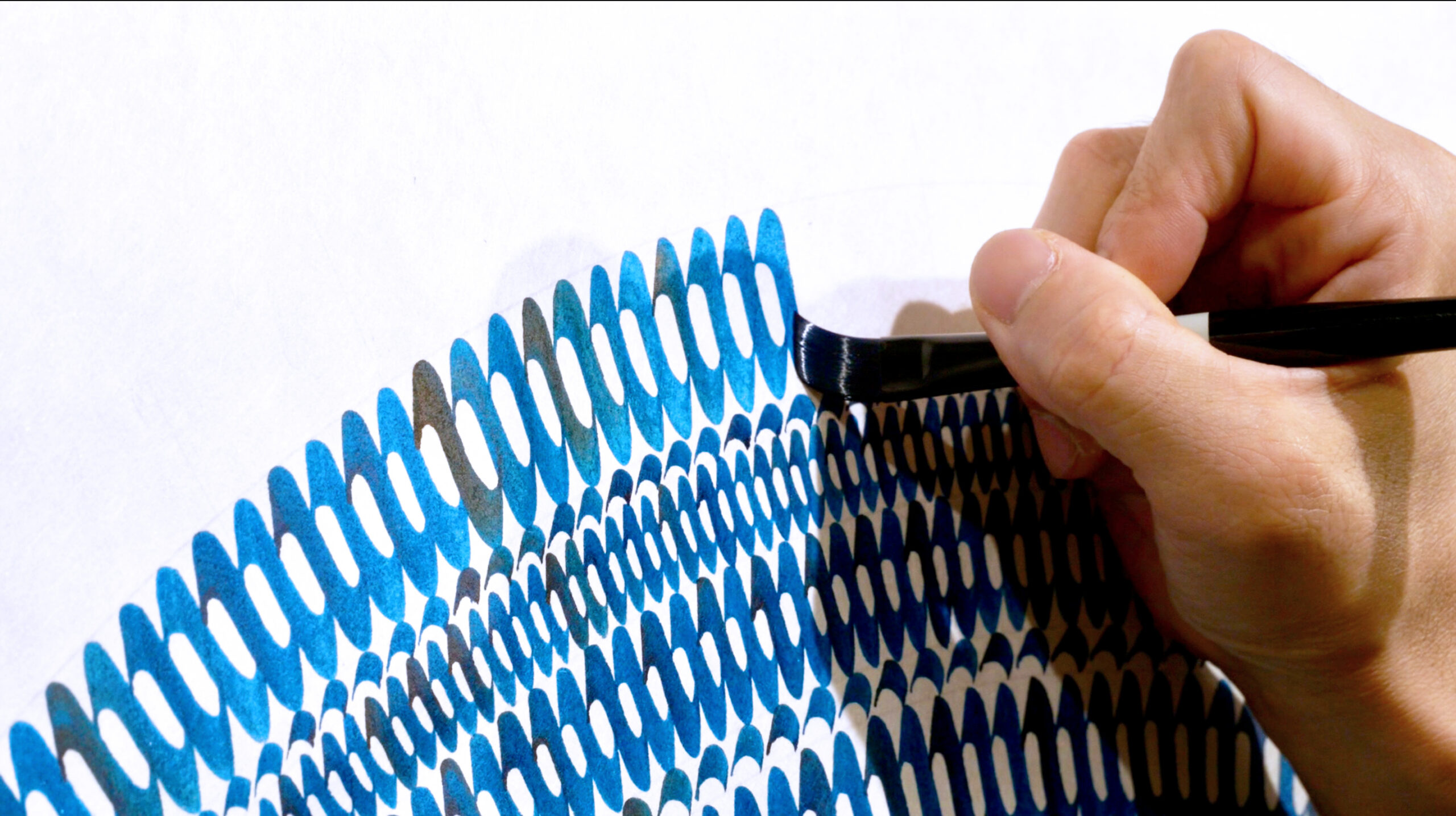
“How do you manage interruptions? If the phone rings or someone knocks on the door in the middle of a “flow” moment, how do you get back into the groove?”
I try to anticipate and avoid interruptions as much as possible before I begin working.
If my concentration is interrupted, I do not force myself to return to work immediately. Instead, I take a moment to settle my mind, perhaps by having a cup of coffee.
“What is your favorite time of day to paint and why? Is there a “cursed” hour when you know it’s better not to try?”
I enjoy working in the morning because I can feel the night giving way to a new day.
On the other hand, I do not work through the night or stay up all night painting.
For me, making art and everyday life are closely connected, and I maintain a regular daily routine as I work.
“When you finish a work session, how do you disconnect? Is it hard for you to “leave” the painting mentally when you go to sleep?”
Even after I finish working, I cannot completely switch off my thoughts about my work.
Whether I am eating or falling asleep, my work remains somewhere in the back of my mind. I naturally find myself thinking about what to do next and how to develop the work further, even during my everyday life.
This is especially true when I am working on a large-scale piece. Since I spend many consecutive days engaging with the same work, it can become difficult to get it out of my mind, even outside the studio.
However, this does not become a mental burden. Rather, I feel that the creative process does not come to an end within the studio, but continues uninterrupted throughout my everyday life.
“If you could stop time at a specific moment in your creative process (the sketch, the first stain, the final detail), which one would you choose to stay in forever?“
It is difficult to choose a particular moment.
My works are created through a process of repetition within a cyclical structure. Although each individual work is completed within the physical boundaries of the canvas, I believe that all of my works are connected beyond time, in the sense that each one reflects my own existence.
The completion of one work does not mean the end of my overall practice. My past works connect to who I am in the present, while my current practice continues toward the person I will become in the future.
Within a cyclical structure, it is impossible to clearly distinguish between a beginning and an end. I feel as though I remain suspended within this cycle, slightly removed from the linear flow of time.
If I could stop time, perhaps I would choose to remain in that state where the act of creation continues forever, beyond the distinction between completion and incompletion.
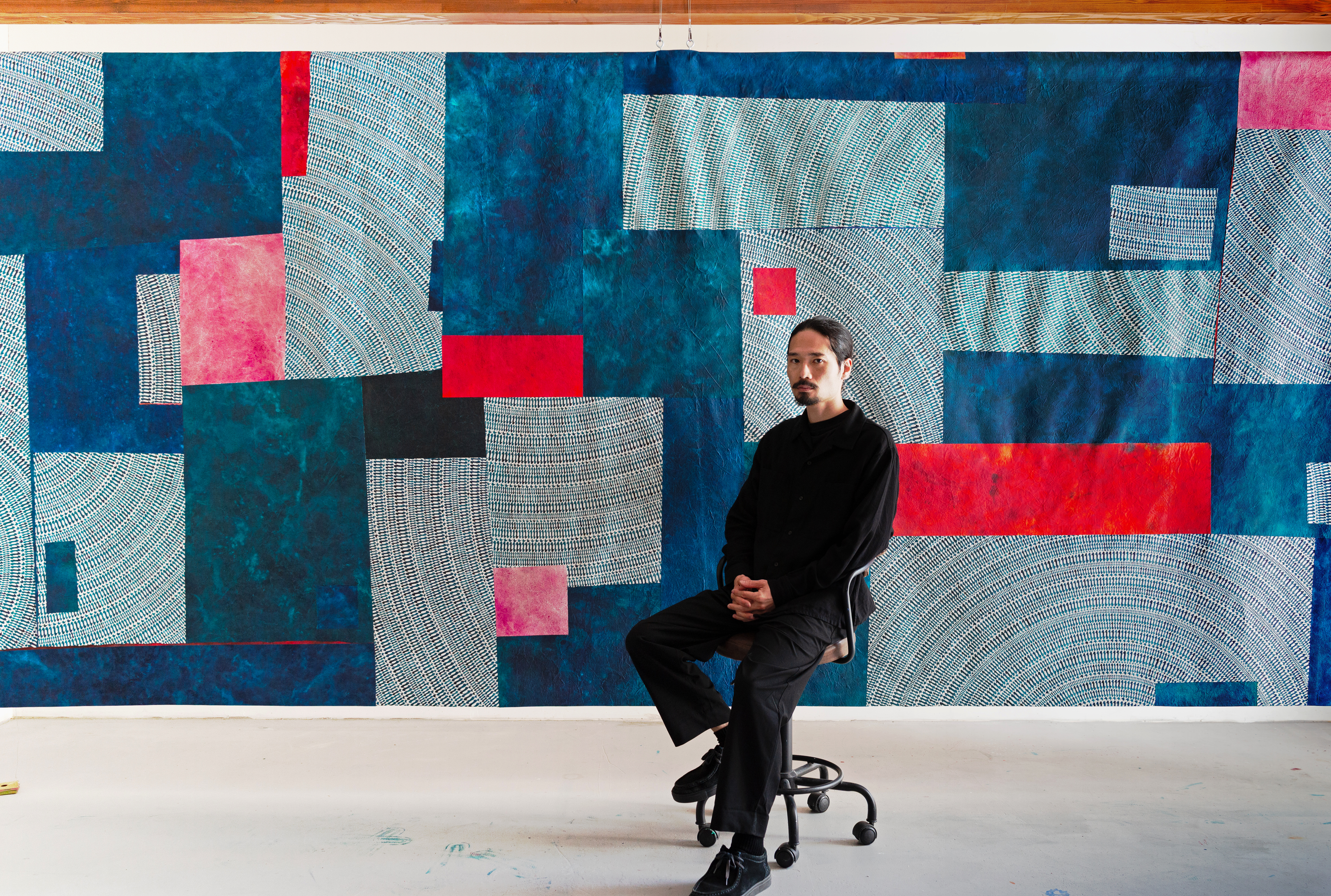
Ryo Koizumi (小泉遼, born 1985 in Fukushima Prefecture) is a Japanese contemporary artist and calligrapher whose pictorial work, fully developed since 2019, fuses Eastern philosophical thought with Western techniques such as oil painting and glazing to explore concepts of regularity, repetition, accumulation, and reconstruction; his “enso” series is inspired by the zen circle, mandalas, and dry gardens, while the “Halo” series (2021) focuses on the representation of light through the superposition of layers of paint, and his work has been exhibited at fairs such as Art Osaka and Art Fair Tokyo, combining his work with the creation of murals for events such as Summer Sonic and Google offices as a member of the RELISH team.
Piece with Artist Magazine. november 2026. © www.piecewithartist.com
@piecewithartist
@RYOKOIZUMI_
ADVERTISEMENT


